Padma Bhushan  ·  Padma Shri  ·  Gomant Vibhushan

Laxman Pai

1926 – 2021    Margão, Goa

Master Painter  ·  Son of Goa  ·  Voice of Modern India

Explore His Work
Scroll
I play the raga at night — let it fill the room, fill me. Then in the morning, I paint what I heard. — Laxman Pai, on his Musical Moods series
The Artist

A Life
Painted in
Colour & Courage

Laxman Pai was one of the towering figures of modern Indian painting — an artist whose canvases absorbed the poetry of Jayadeva, the devotion of the Ramayana, and the meditative silences of Indian classical ragas, and gave them back to the world in bold, vibrant form.

Born on 21 January 1926 into a Gaud Saraswat Brahmin family in Margão, Portuguese Goa, Pai discovered his calling as a child in his uncle Ramnath Mauzo's photo studio, hand-colouring black-and-white photographs — an early lesson in the alchemy of colour he never forgot.

During the 1940s, while Goa lived under Portuguese colonial rule, Pai threw himself into the liberation movement and was arrested three times. He studied at the Sir J. J. School of Art in Bombay (1943–47), then moved to Paris and the École des Beaux-Arts, where he worked alongside F. N. Souza and S. H. Raza, absorbing Klee, Miró, and Chagall while remaining unmistakably Indian.

He held over 110 solo exhibitions across five continents and served as Principal of the Goa College of Art (1977–87). He passed away peacefully at his home in Dona Paula, Goa, on 14 March 2021, aged 95.

110+Solo Exhibitions
23Painting Series
70+Years Creating
5Major Honors
From the Family Collection

His Paintings —
Six Decades at the Easel

A curated chronological walk through Laxman Pai's career — early Bombay academy studies, the breakthrough Paris years, the signature Musical Moods and Dance Forms, and the late masterworks. All works shown are held in the family collection.

1940s Bombay & the J.J. School of Art
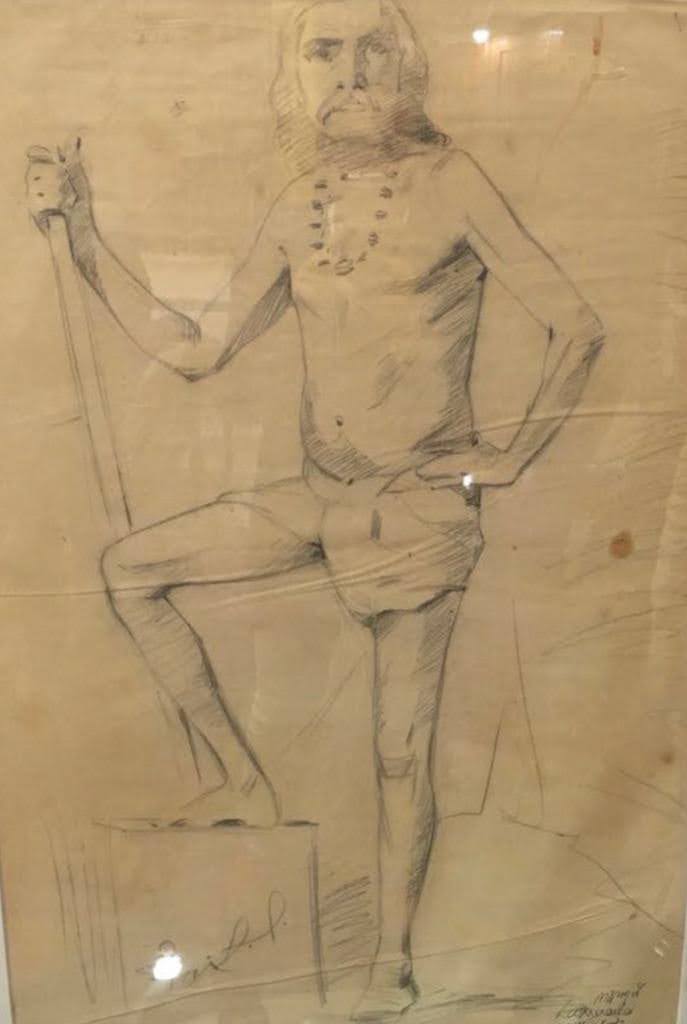
Standing Male Figure Study — J.J. School of Art, Bombay
c. 1944Standing Male — Anatomical Study
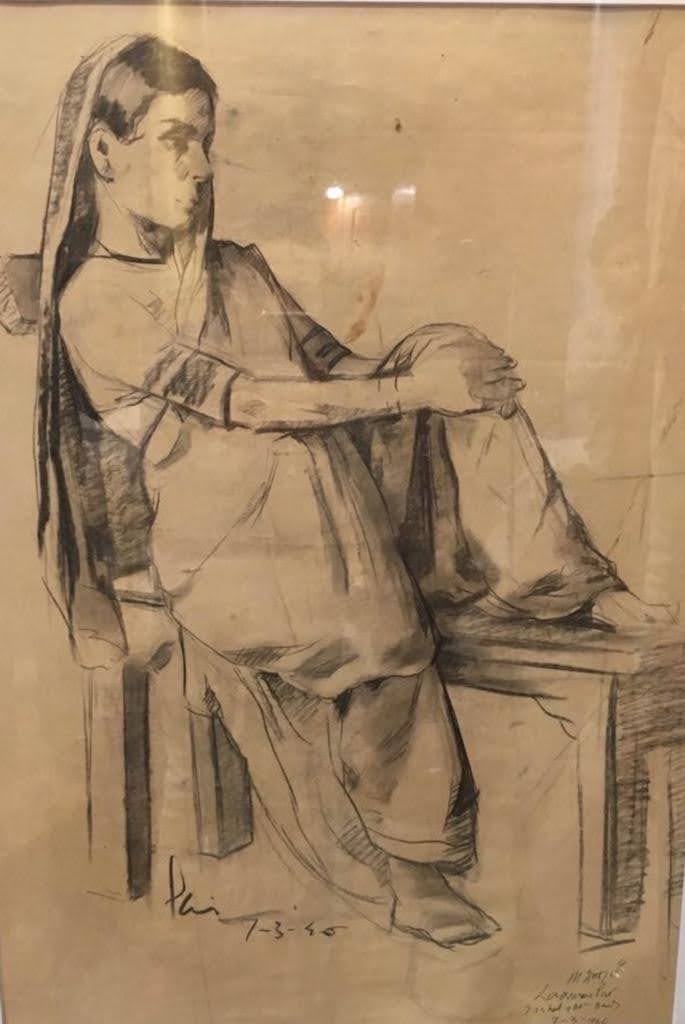
Mangu — seated woman figure study, J.J. School of Art, 7 March 1945
7 Mar 1945Mangu — Seated Woman
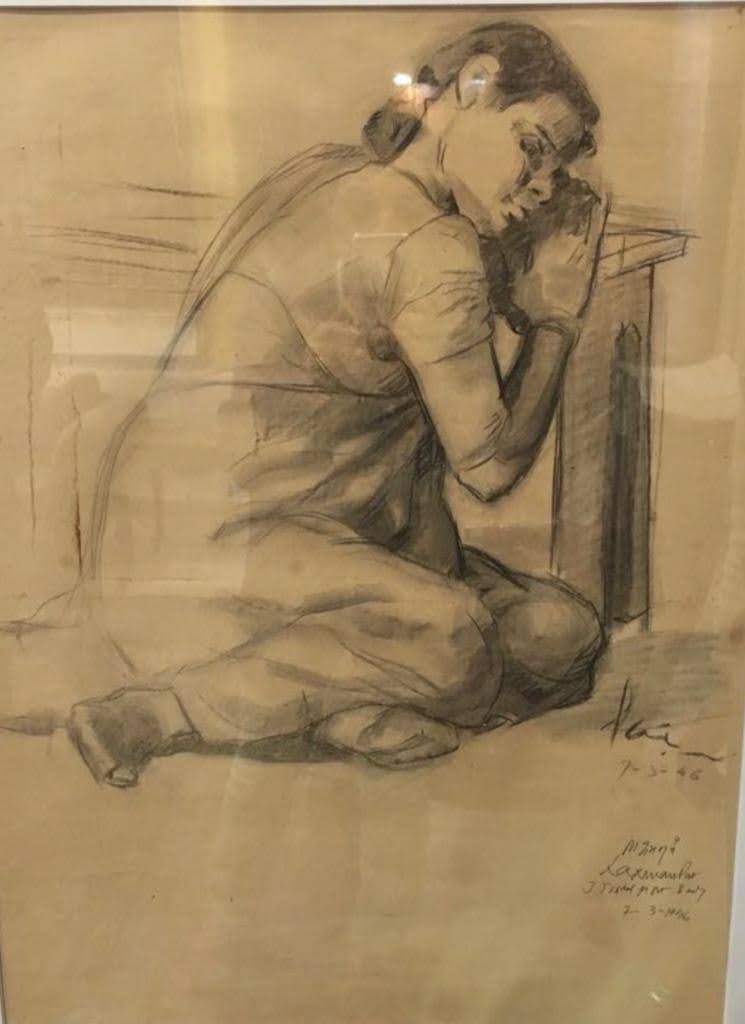
Seated Woman in Prayer — figure study, Bombay, 3 March 1946
3 Mar 1946Seated Woman in Prayer
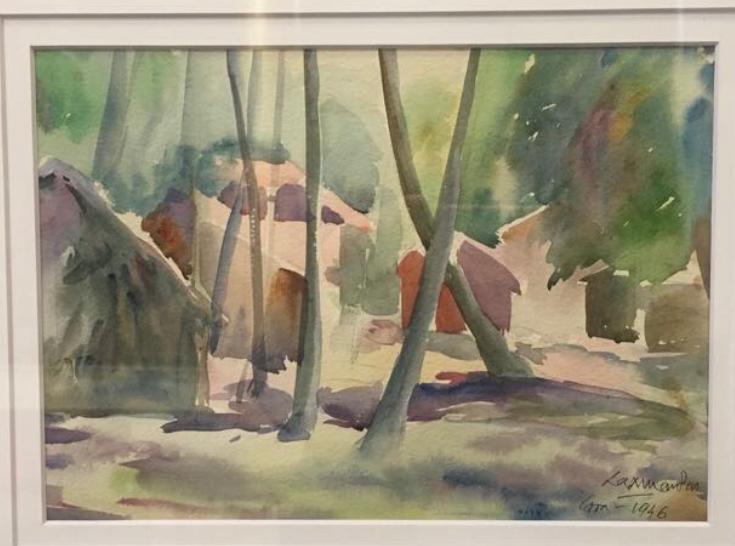
Forest Light — watercolour landscape, Goa 1946
1946Forest Light — Goa
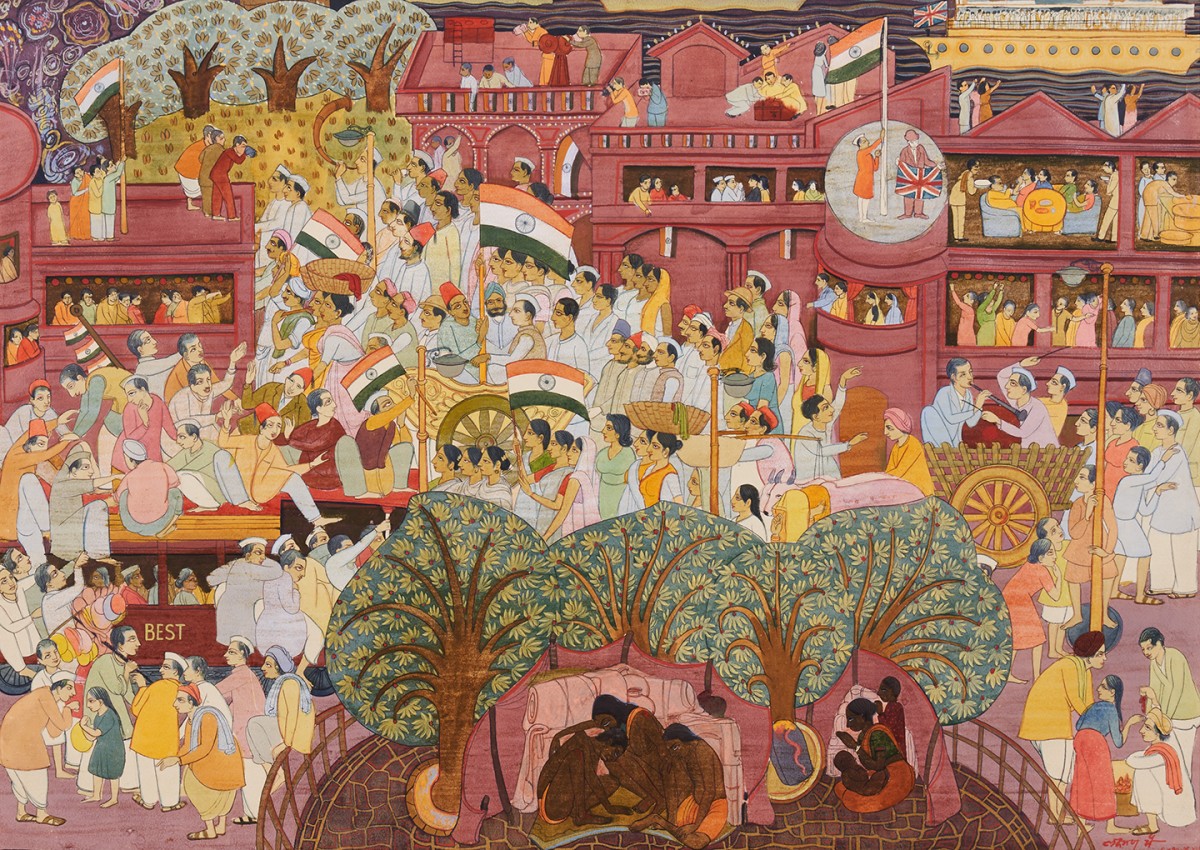
India's Independence — Laxman Pai, 1947
1947India's Independence
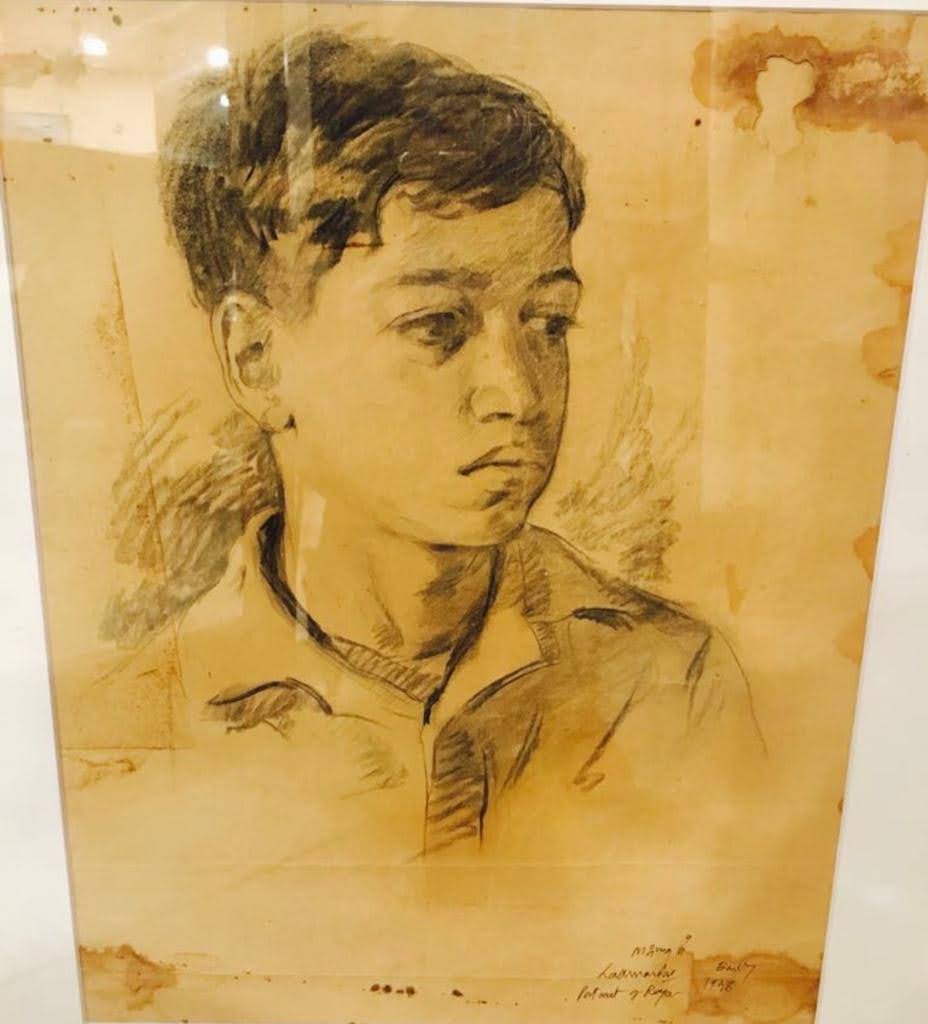
Portrait of Raya, the artist's brother — Bombay, 1948
1948Portrait of Raya (the artist's brother)
1950s Paris & Goa · The First Great Series
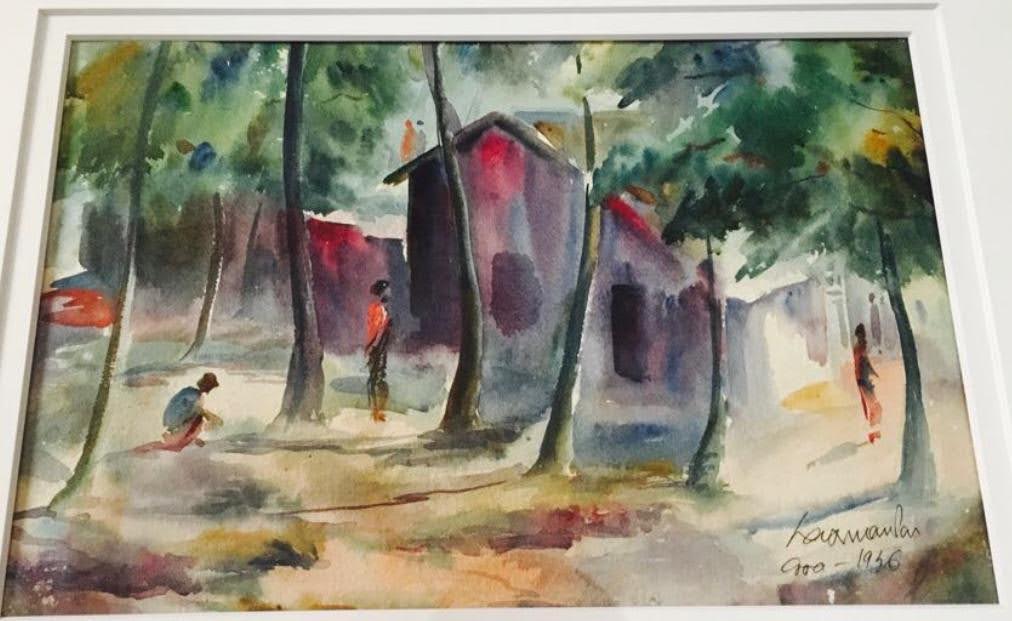
Village Lane — Goa, 1956 watercolour
1956Village Lane — Goa
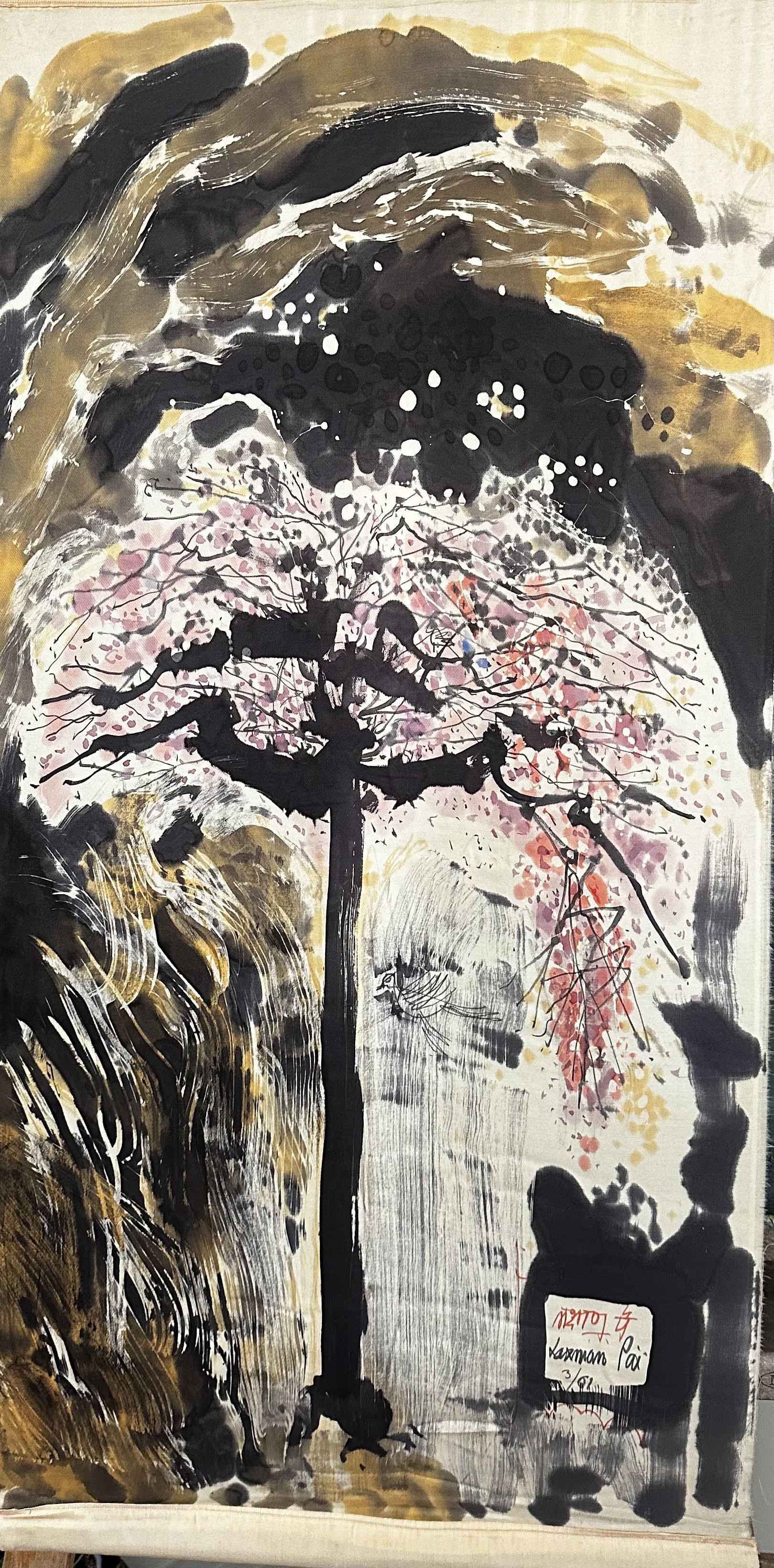
Tree of Life with Blossoms — Laxman Pai, 1950s
1950sTree of Life with Blossoms
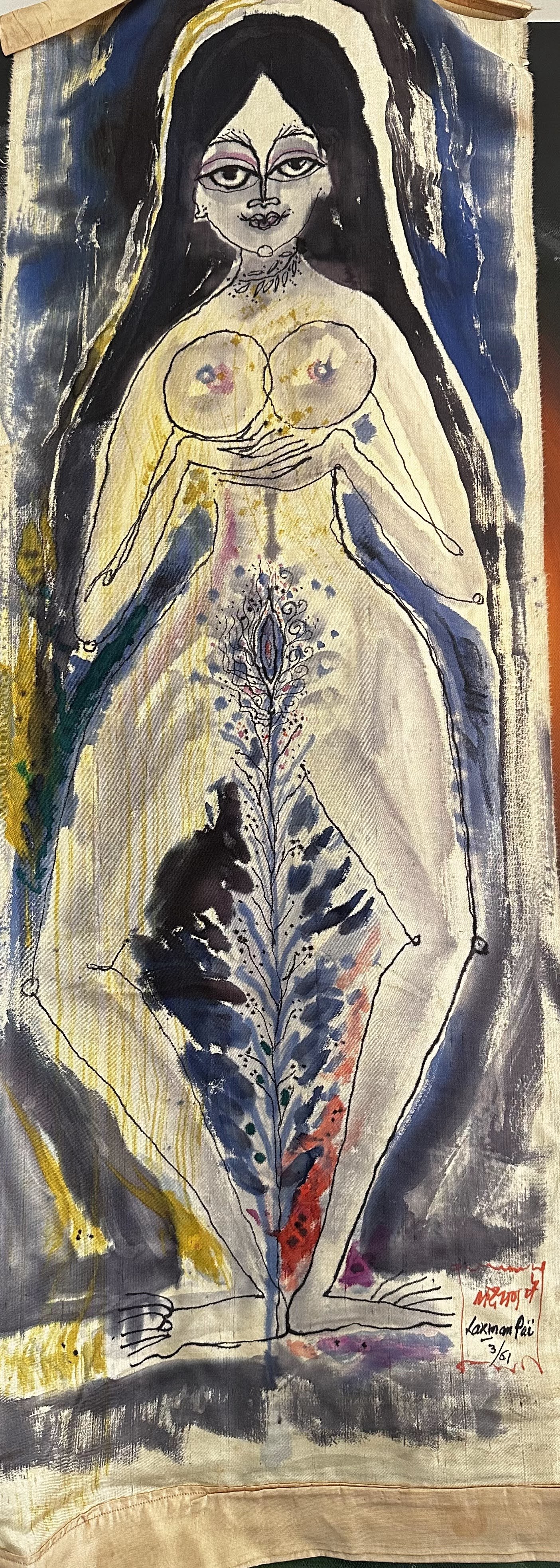
Female Form Standing — Laxman Pai, 1950s
1950sFemale Form — Standing
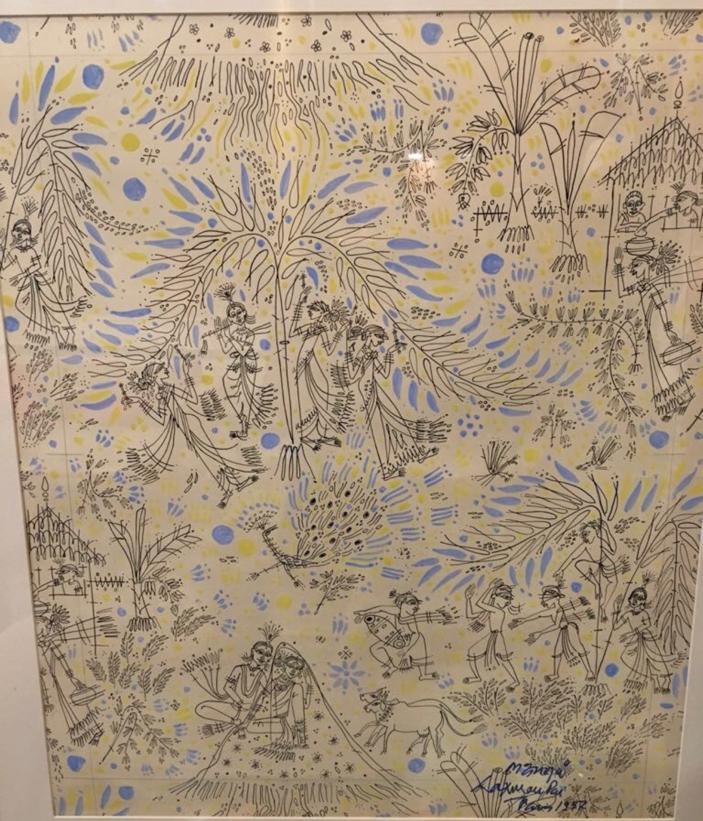
Gitagovinda — Radha & Krishna pastoral, Paris 1957
Paris 1957Gitagovinda — Radha & Krishna
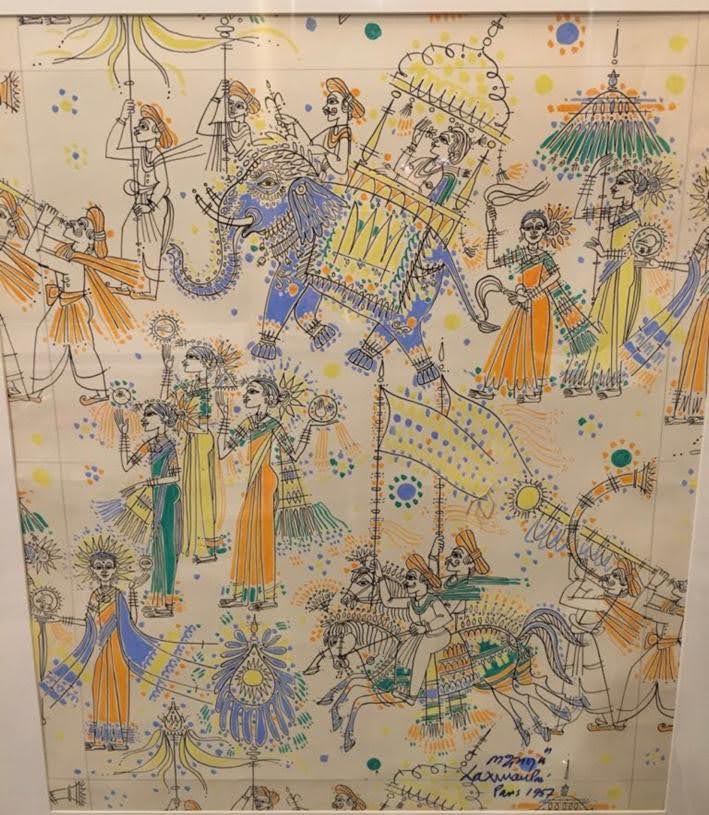
Royal Procession with Elephant — Paris 1957
Paris 1957Royal Procession
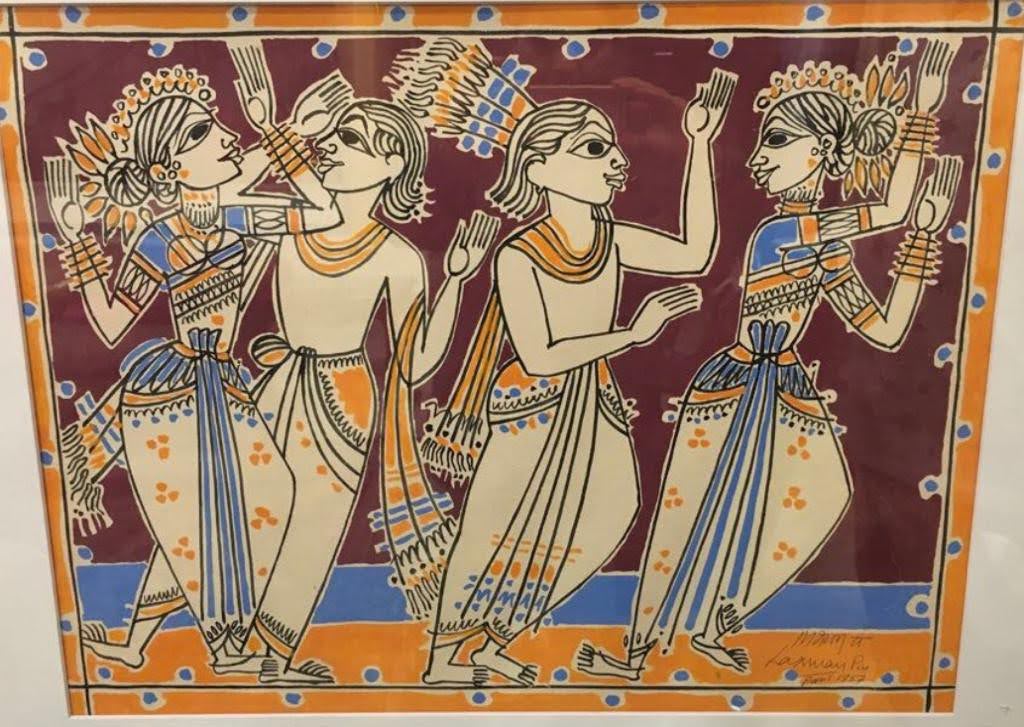
Four Dancers — Paris 1957
Paris 1957Four Dancers
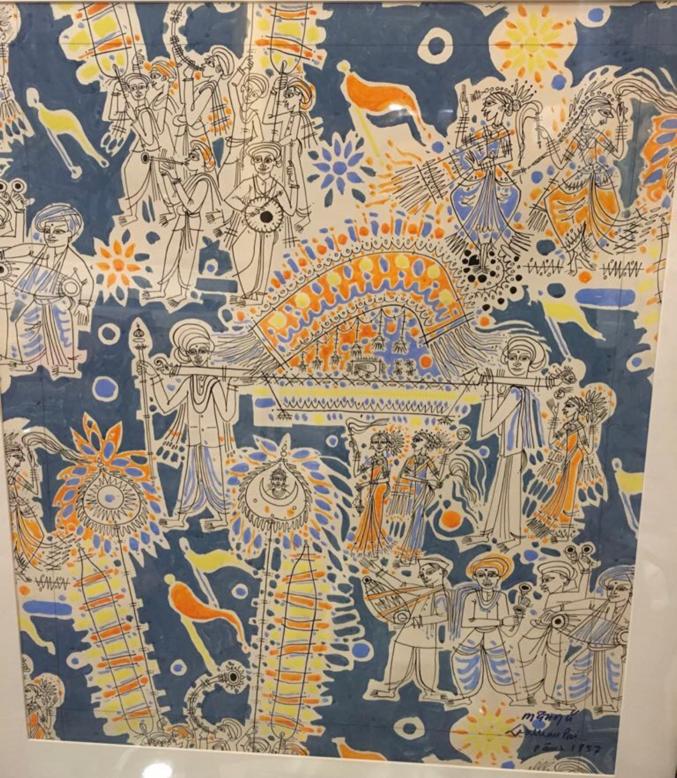
Festival Procession with Palanquin — Paris 1957
Paris 1957Festival Procession
1960s Musical Moods & Dance Forms · The Signature Years
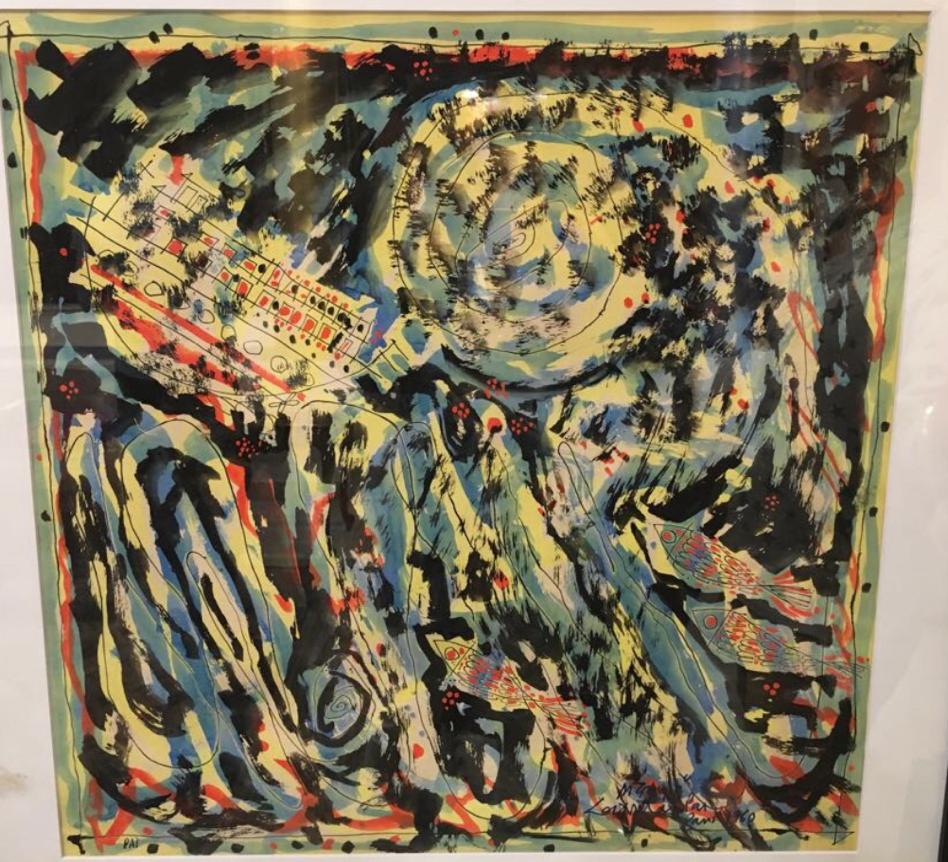
Night Raga — Musical Moods series, c. 1965
c. 1965Night Raga · Musical Moods
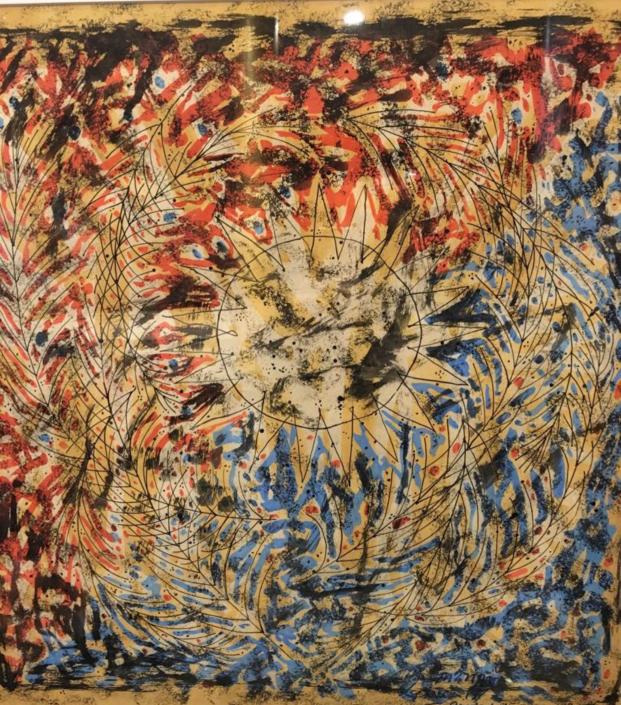
Fire & Water — spiral abstract, Musical Moods era
c. 1965Fire & Water · Musical Moods
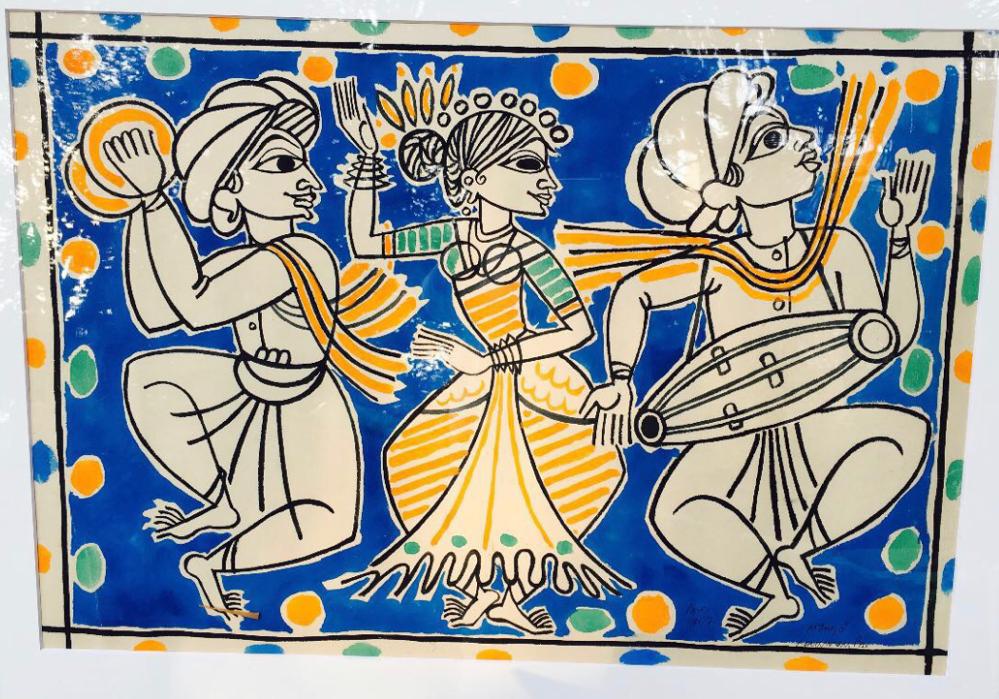
Three Dancers — Dance Forms series, 1967
1967Three Dancers · Dance Forms
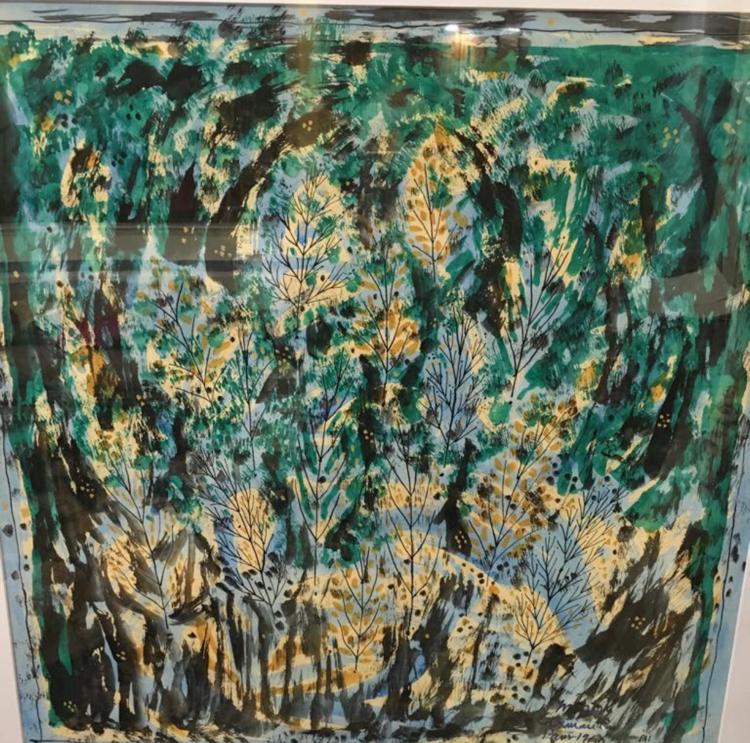
Forest in Green & Gold — 1960s
1960sForest in Green & Gold
1970s Kangara Portraits & Later Engagements
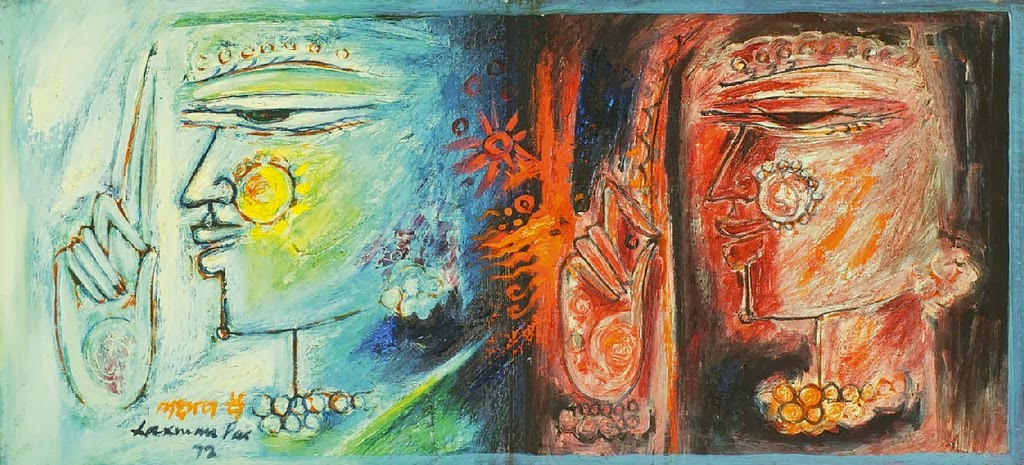
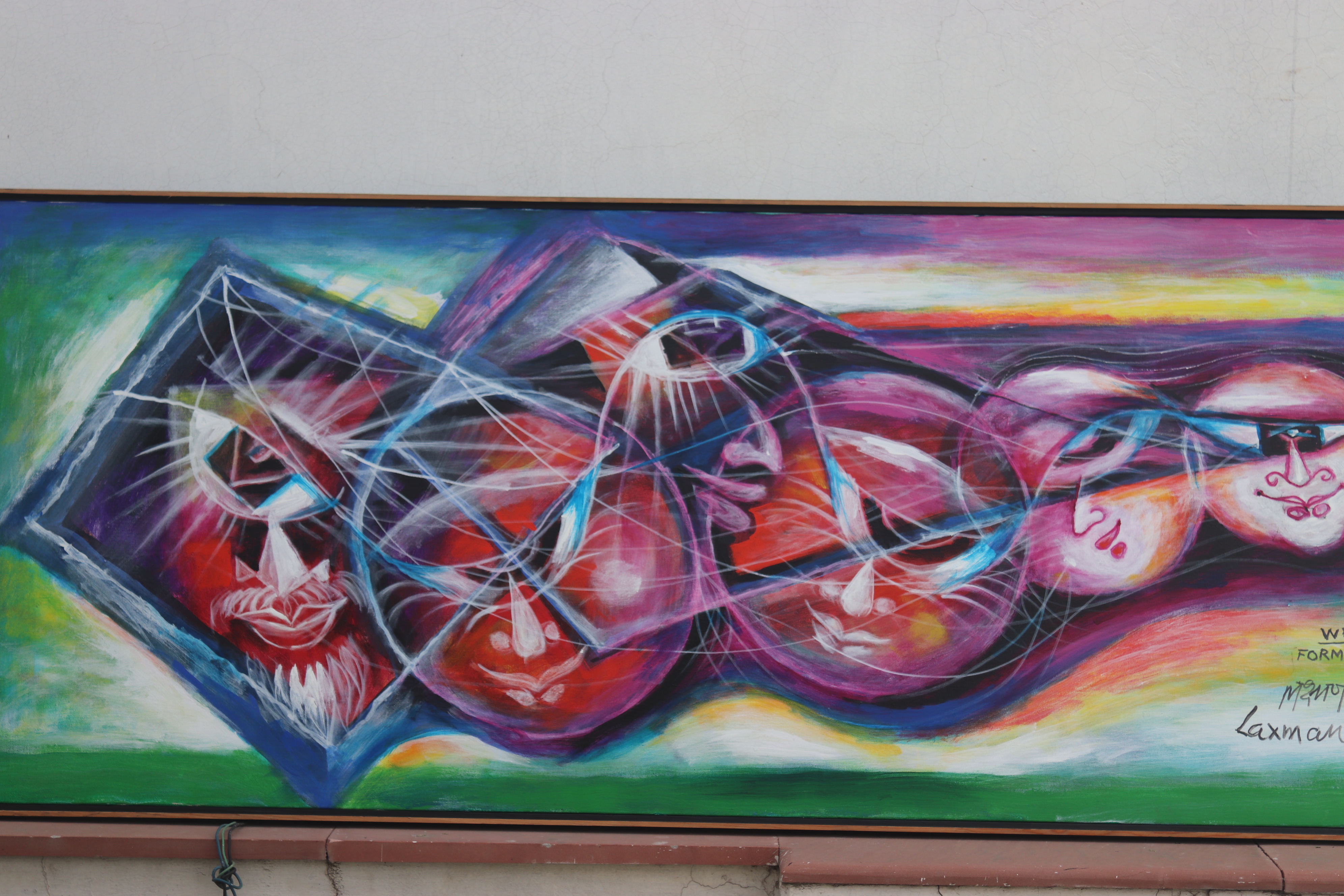
Two Faces — a diptych in cool & warm, 1972 (Kangara Portraits era)
1972Two Faces — Cool & Warm
Three Listeners — 1978
1978Three Listeners
1980s Goa College of Art · Principal Years
Coast of Goa — pyramidal allegory of the Konkan coast, 1988
1988Coast of Goa
1990s Navraasa, Jeevanotsava & the Mature Voice
Panchatatva — the five elements, 1993
1993Panchatatva — Five Elements
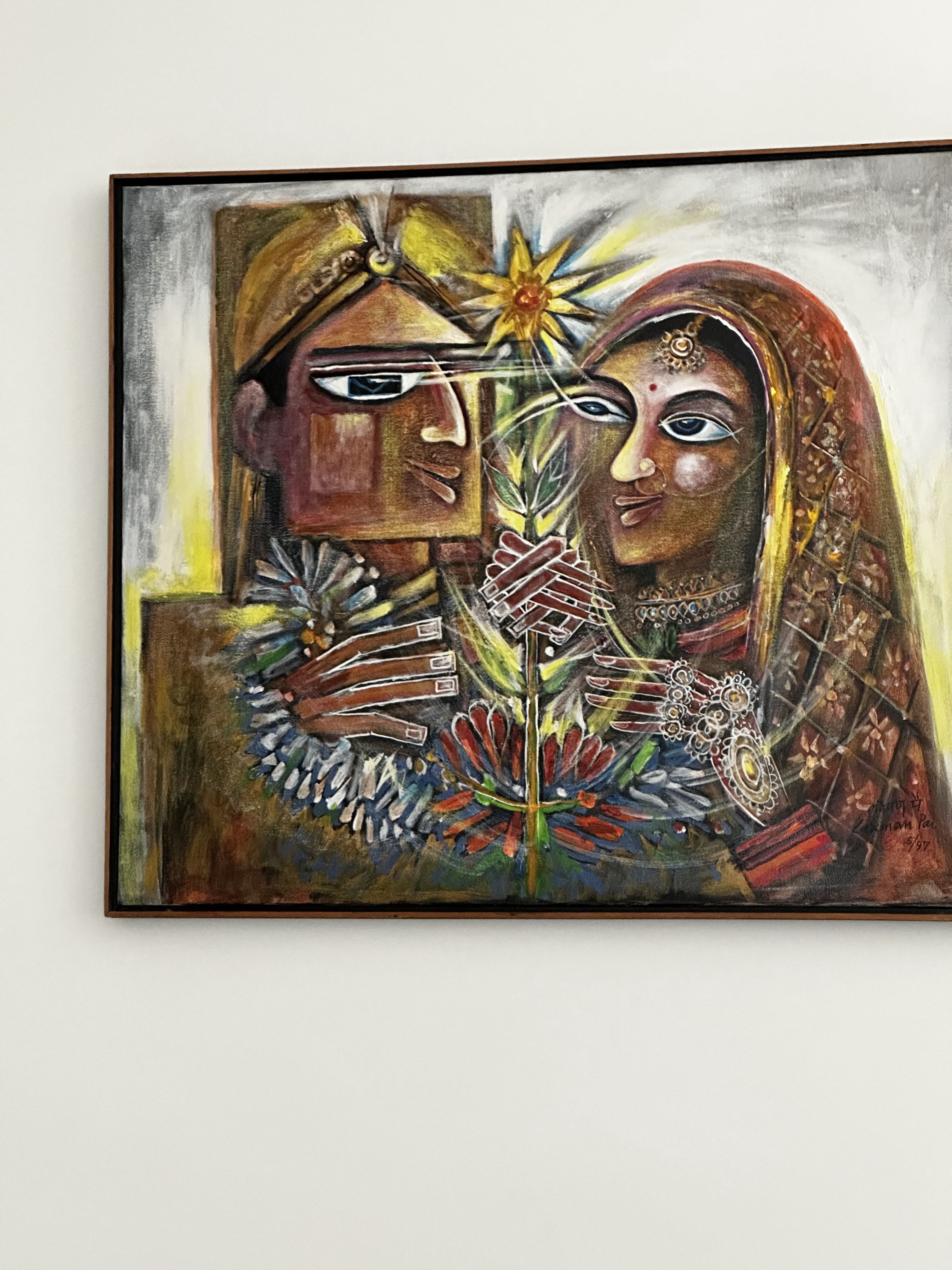
Purush & Prakriti — a couple portrait, c. 1994
c. 1994Purush & Prakriti
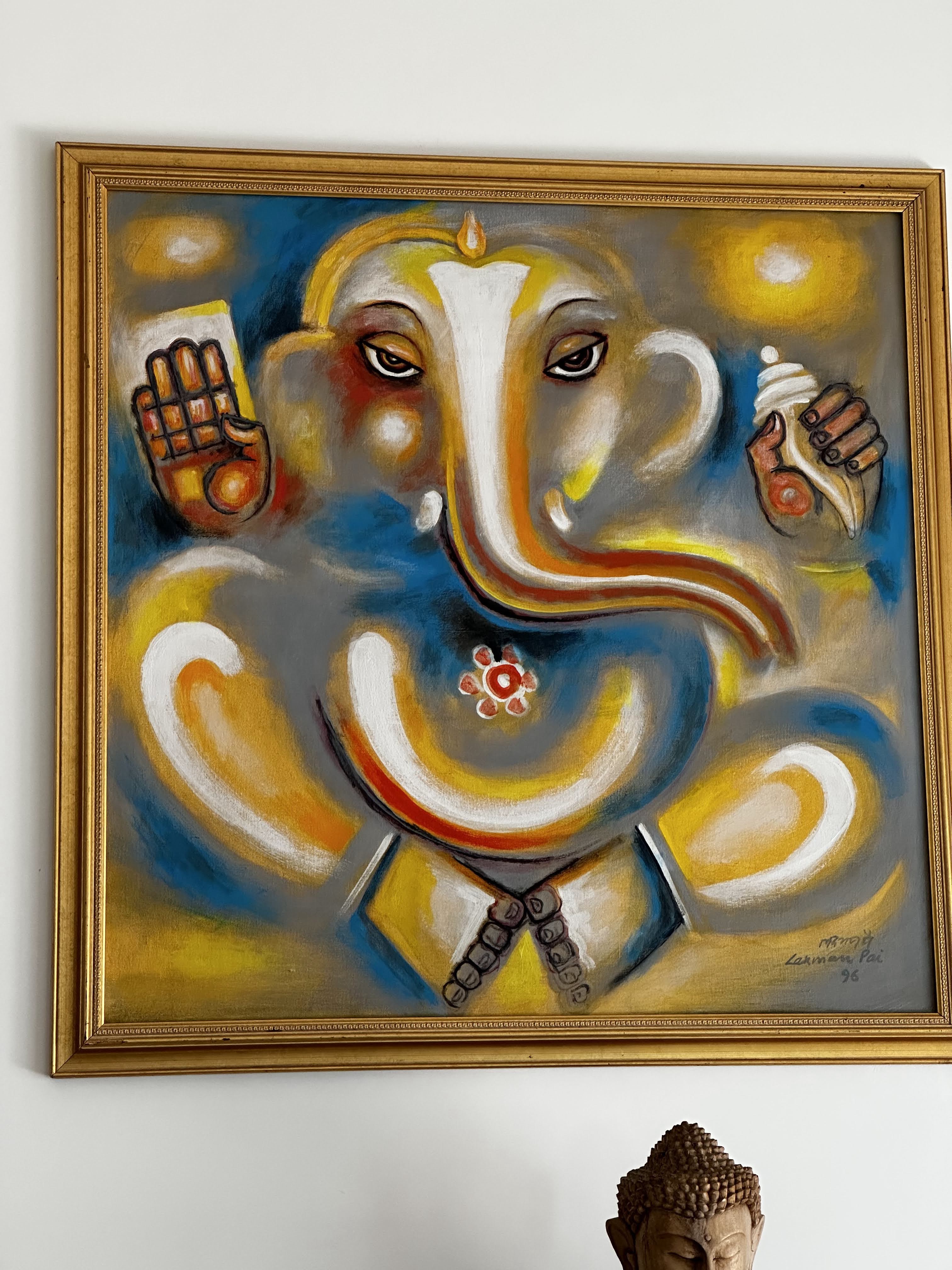
Ganesha — frontal portrait, 1996
1996Ganesha — Frontal
2000s Spring Flowers & the Family Tree
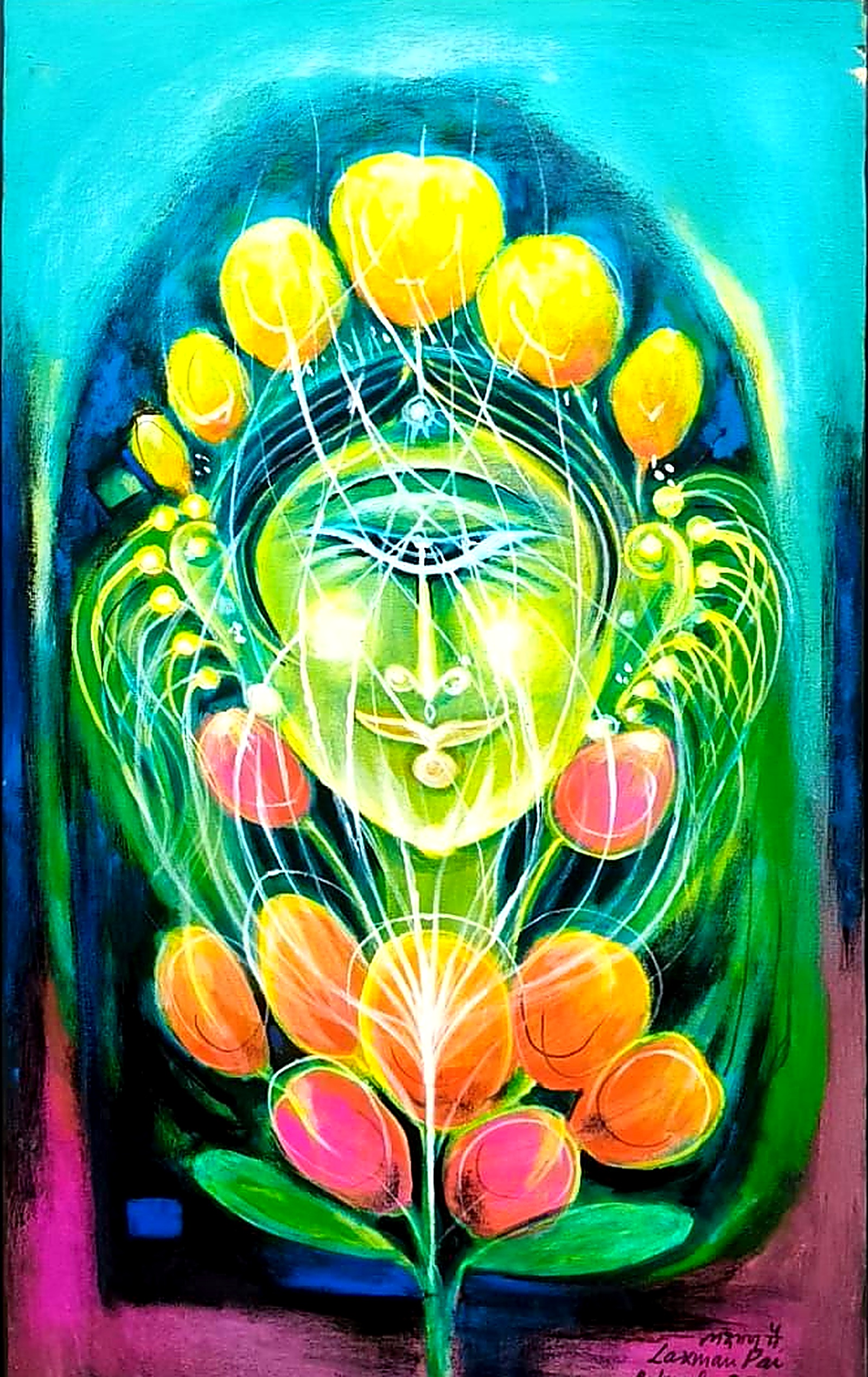
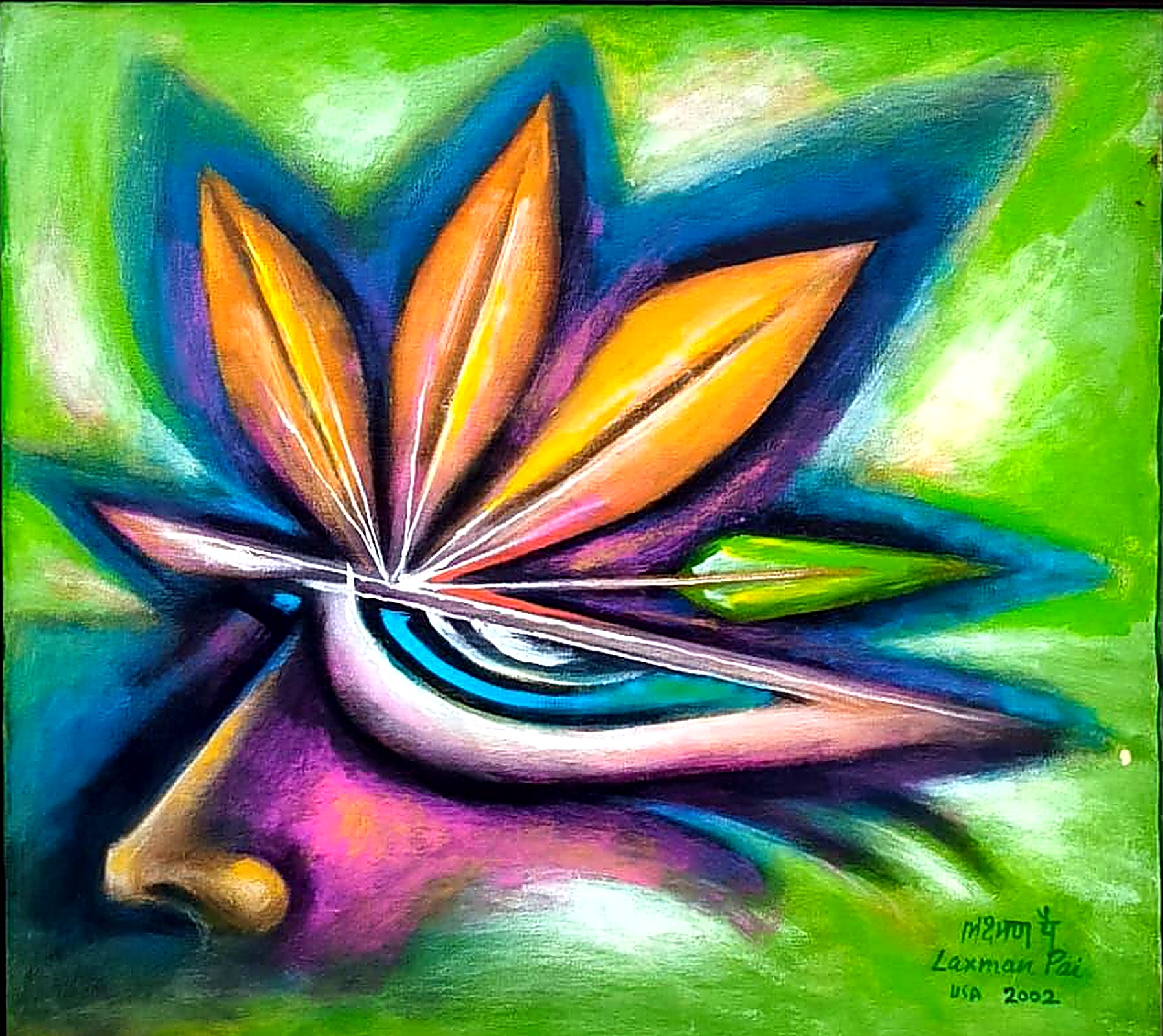
Spring Flowers No. 7 — Redmond, 2001
Redmond, 2001Spring Flowers No. 7
Human Forms No. 26 — USA, 2002
USA, 2002Human Forms No. 26
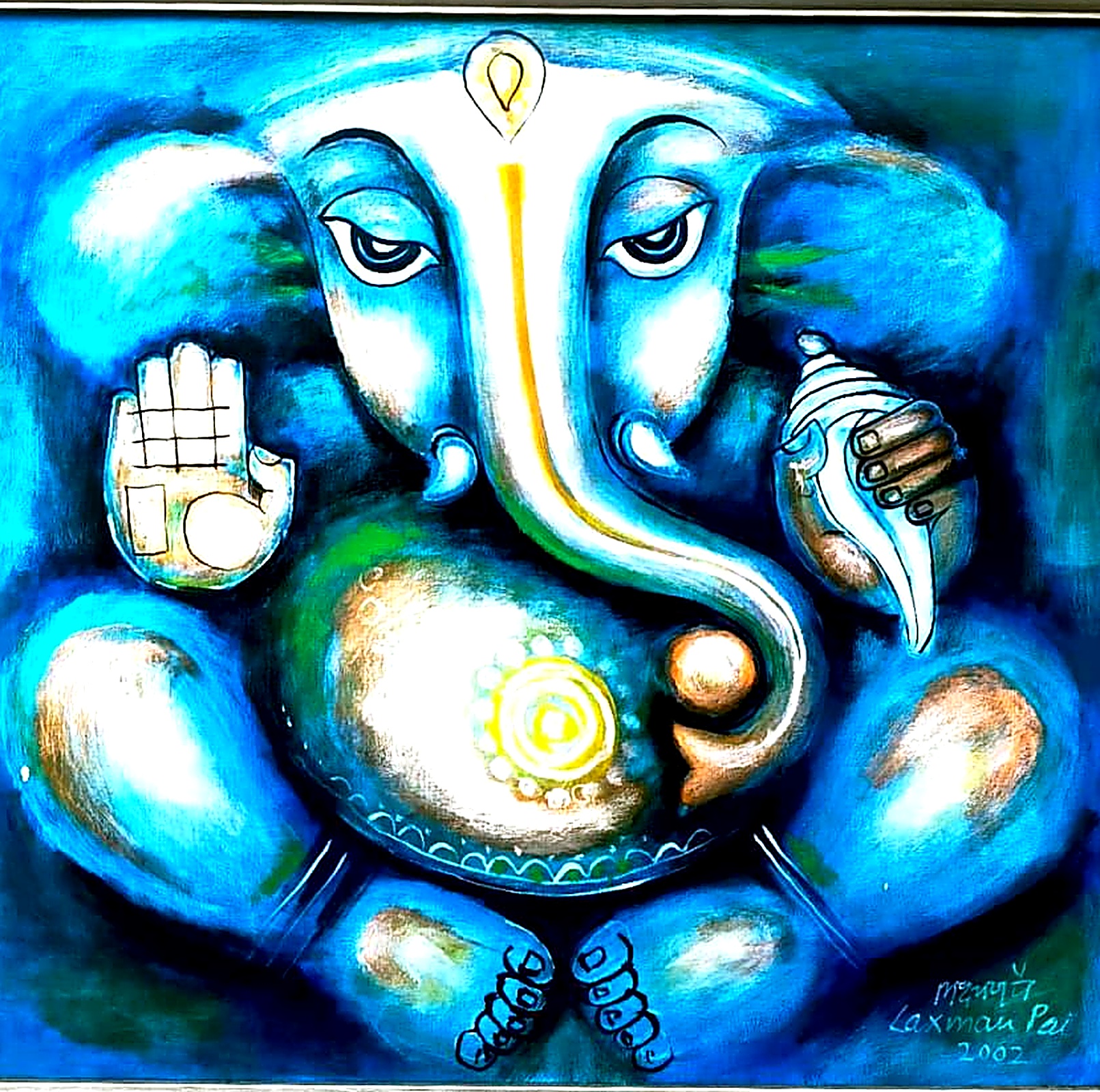
Ganesha No. 12 — 2002
2002Ganesha No. 12
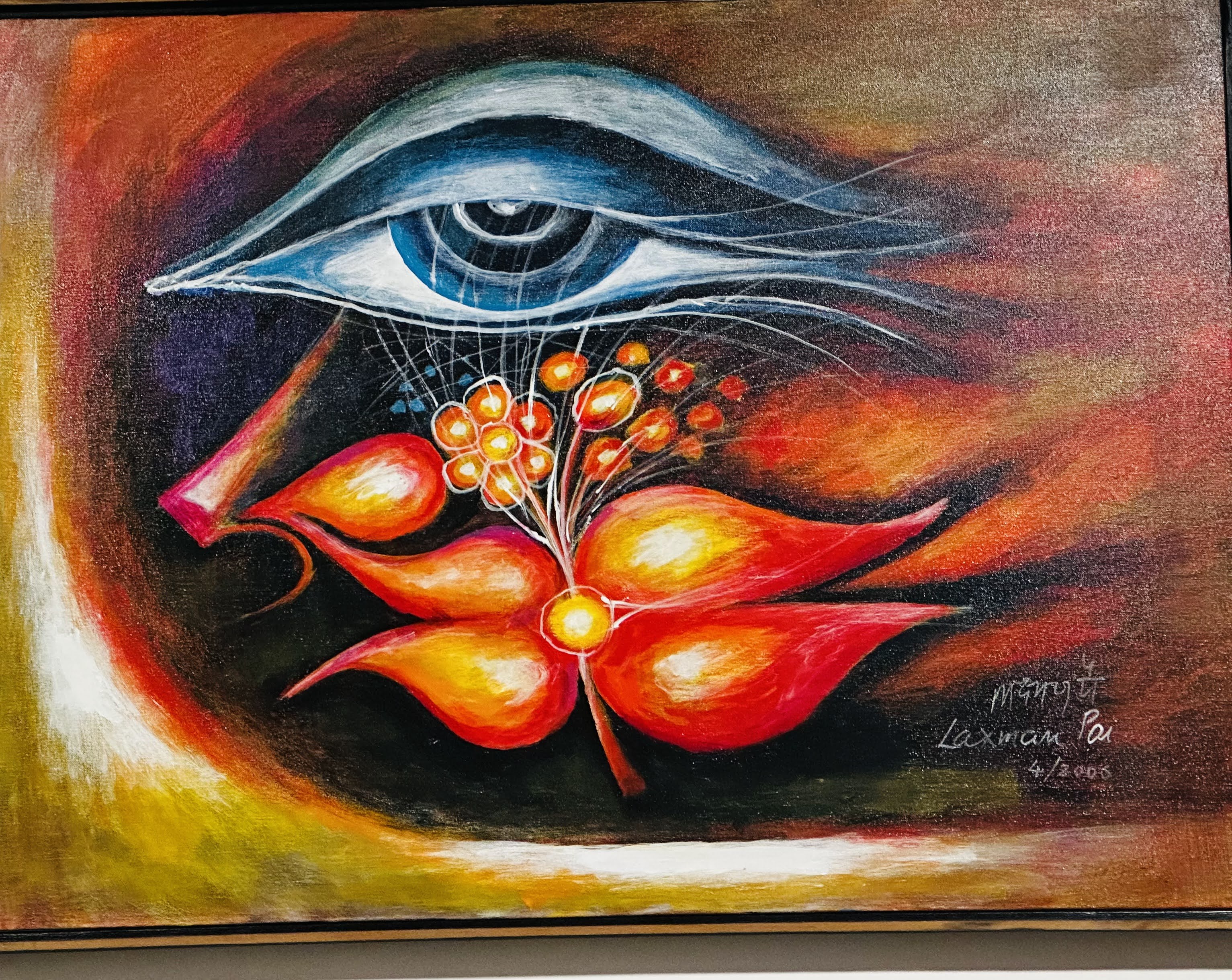
Eye and Flower — Spring Flowers series, April 2005
Apr 2005Eye and Flower · Spring Flowers
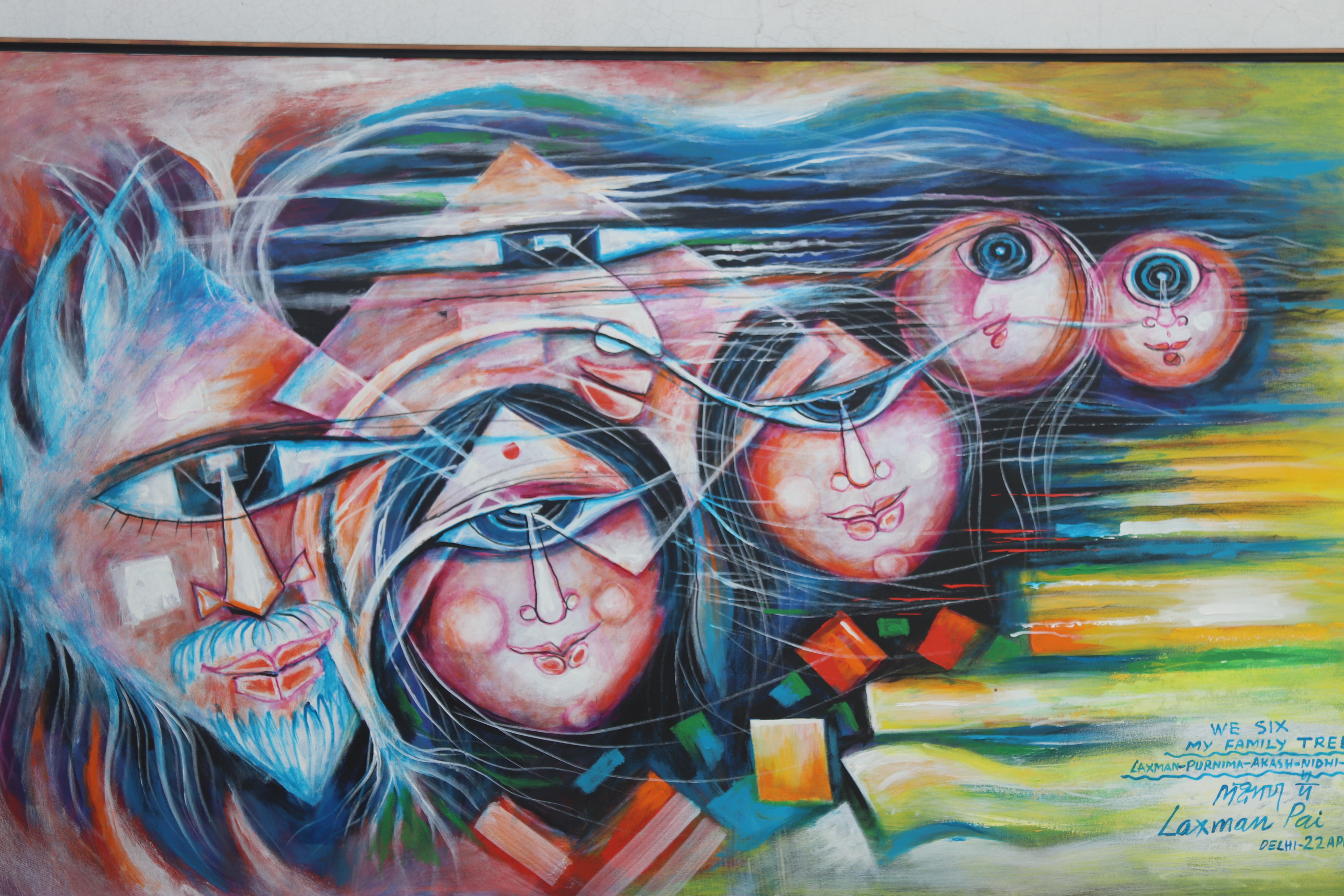
We Six — My Family Tree, Delhi, April 2007
Delhi, Apr 2007We Six — My Family Tree
We Six — My Family Tree (Forms 2007 No. 1), USA, June 2007
USA, Jun 2007We Six — Forms 2007
2010s Forms & Ganeshas · The Final Years
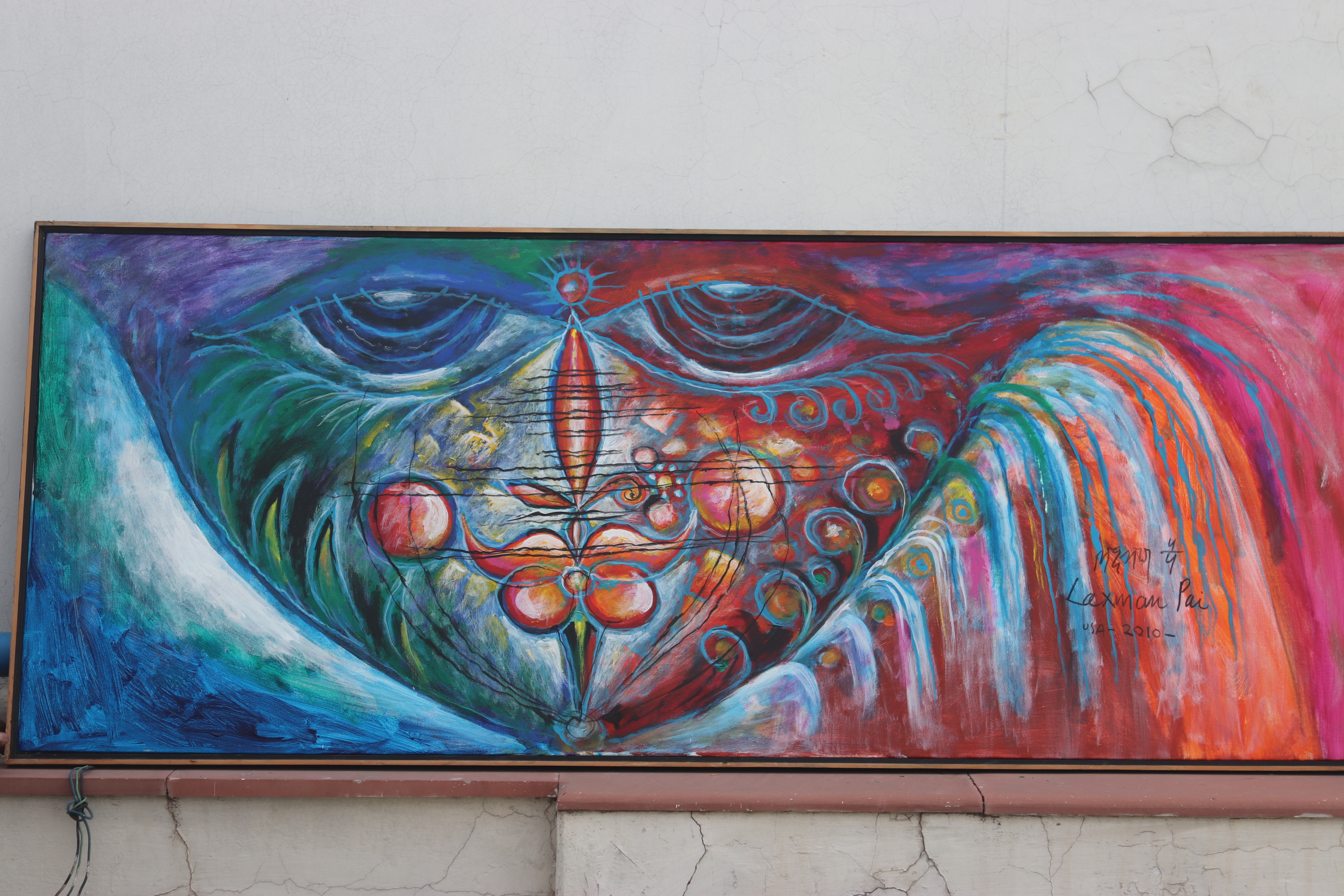
Forms 2010, No. 4 — USA, May 2010
USA, May 2010Forms 2010 · No. 4
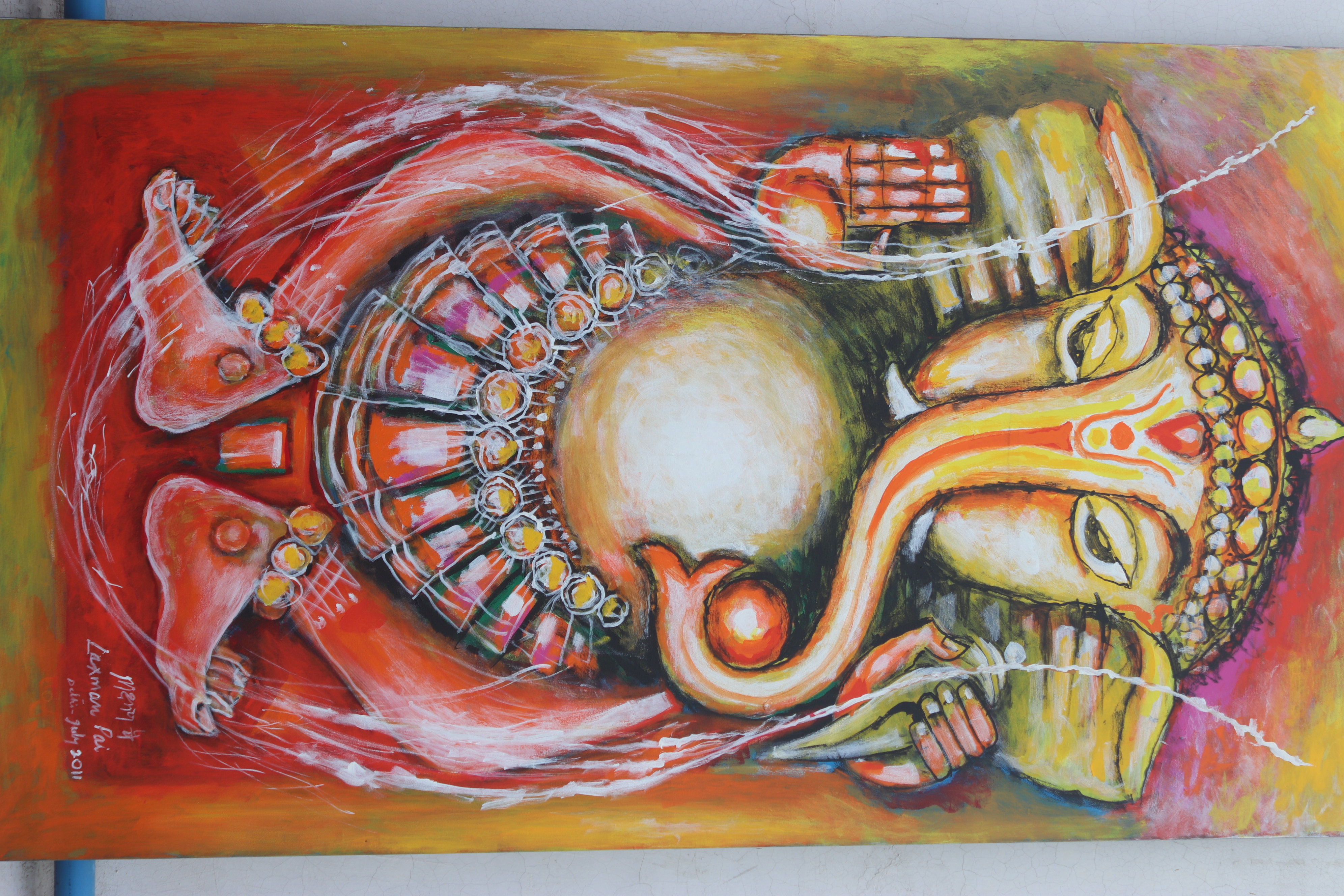
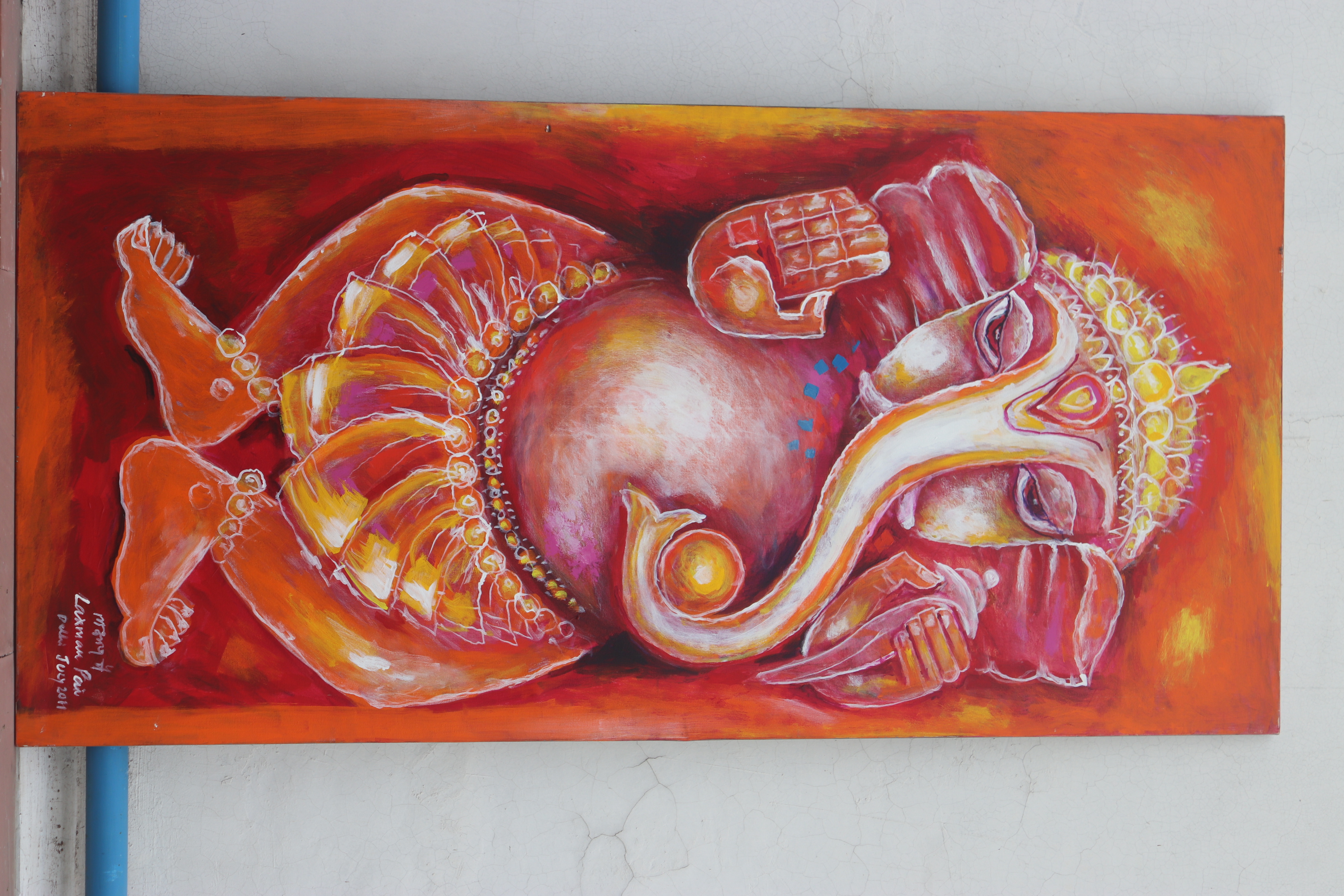
Ganesha — Laxman Pai, 2011
2011Ganesha
Ganesha No. 2 — Goa, May 2011
Goa, May 2011Ganesha No. 2
Complete Works

23 Painting Series
in Chronological Order

Over seven decades, Laxman Pai created 23 major thematic series — from ancient epics to classical ragas, from Kashmir portraits to the Tree of Life.

1954

Gitagovinda

Jayadeva's 12th-century Sanskrit poem — the ecstatic love of Radha and Krishna — rendered with angular figuration and luminous colour. Blends Indian miniature grace with Parisian modernism.

Epic Literature · Devotional
1958

Ramayana (First Series)

Heroic figures rendered in bold contours inhabit landscapes of mythic depth, rooted equally in Indian folk painting and Parisian modernism. The first of two Ramayana engagements.

Epic Literature · Mythology
1958

Life of Mahatma Gandhi

A deeply personal tribute — Pai himself risked his liberty for Goa's freedom. Traces Gandhi's journey from South Africa to Dandi with austere, dignified brushwork.

History · Biography
1959

Life of the Buddha

Meditative and suffused with golden calm. Traces the Bodhisattva's path through simplified forms echoing both Ajanta frescoes and modern abstraction.

Spirituality · Philosophy
1963

Kalidasa's Ritusamhara

Six seasons of Kalidasa's classical Sanskrit poem — the sensuous abundance of monsoon, the delicate bloom of spring, the austerity of winter — in luminous, jewel-like colour.

Nature · Classical Poetry
1965

Kashmir Portraits

Studies of the people and landscapes of Kashmir — their angular, noble faces; still lakes and snow-capped peaks. The particular rendered as meditation on human dignity.

Portrait · Landscape
1966

Purush & Prakriti

The Sankhya philosophical duality — consciousness and nature/matter — through the interplay of male and female forms. Bold, sensuous, deeply philosophical.

Philosophy · Form
1967

Dance Forms

Celebratory, rhythmic compositions inspired by India's classical and folk dance traditions — Bharatanatyam's angular poses, the whirl of Kathak — frozen in kinetic line.

Dance · Movement · Tradition
1971

Ramayana (Second Series)

Pai's second engagement with the Ramayana — more mature, more distilled. Figures more angular, palette deeper, narrative more confident in its visual economy.

Epic Literature · Mythology
1972

Kangara Portraits

A homage to the Pahari miniature tradition — its willowy women, verdant landscapes — reinterpreted through a thoroughly modern sensibility.

Portrait · Miniature Tradition
1982

Rajasthan

Fort walls the colour of sunset, turbans of turquoise and crimson, camel caravans against a vast sky — Pai distils an entire civilisation into blazing canvases.

Landscape · Culture · Colour
1991

Navraasa

The nine rasas of Sanskrit aesthetics — Shringara (love) to Vira (heroism), Karuna (compassion) to Hasya (comedy). A complete emotional universe in paint.

Aesthetics · Indian Philosophy
1993

Festival of Seasons

Holi's riot of colour, the lamps of Diwali, the harvest's abundance — Pai's palette at its most exuberant, colour spilling across the canvas like song.

Festival · Nature · Joy
1994

Purush & Prakriti in Kamasutra

Sacred eroticism as a path to the divine. Rooted in temple sculpture and Tantric tradition, the body as a site of liberation.

Philosophy · Sacred Eroticism
1995

Jeevanotsava

"Festival of Life" — a celebration of existence itself. Men, women, children, animals, trees, rivers participating in the great pageant of being. One of Pai's most affirmative series.

Life · Celebration · Humanity
1996

Fantasies

Figures, creatures, and forms dissolve into dreamlike tableaux. Influenced by Miró, these works sit at the border of figuration and pure imagination.

Fantasy · Imagination
1997–98

Kaama · Krodha · Moha · Moksha

Desire, Anger, Delusion, Liberation — the four forces that bind and ultimately free the human soul. Each canvas a meditation on inner experience.

Spirituality · Liberation
2000

Shrinagar Faces

A second Kashmir series — entirely focused on faces. The pale silver of winter, the dusty gold of autumn, the tender green of spring. Faces as landscapes.

Portrait · Kashmir · Light
2001

Spring Flowers

Radiant, exuberant, unrestrained — Pai at 75, still painting with the joy of youth. The flower as a statement of love for colour, for the world, for life itself.

Nature · Joy · Colour
2002

Human Forms

A return to the fundamental subject: the human body stripped of narrative. Pure formal investigation — the miracle of anatomy rendered in Pai's angular economy.

Figure · Form · Anatomy
2003

Female Forms

A devoted study of the female figure — regal, sensuous, sovereign. Rooted in Khajuraho and the Chola bronzes, yet entirely Pai's own: angular, bold, modern.

Figure · Femininity · Sculpture
2004

Flowering Flowers

His final major series — a valedictory celebration of the natural world. The flower not as spectacle but as quiet miracle, as gratitude. Tender and meditative.

Nature · Meditation · Gratitude
Artistic Vision

A Style
Like No Other

Laxman Pai's visual language sits at the intersection of ancient and modern, East and West, the sacred and the sensuous — immediately recognisable, impossible to classify neatly.

01

Angular Figuration

Sharp, confident contours inspired by ancient Egyptian art, Jain miniature, and Indian folk tradition. Every line structural, every form architectural.

02

Luminous Colour

Bright, exuberant, unmixed colour — applied flat, without shadow or gradation. The palette owes something to Matisse, something to Rajput miniature, and everything to Pai's joyful instinct.

03

The Vibrating Line

Rhythmical, energetic, almost musical. Defines form without enclosing it, describes movement without freezing it. A line that breathes.

04

Classical Indian Roots

Every canvas returns to its Indian sources — ragas, epics, philosophies, dance forms, sacred geometry. Modernism was his language; India was his subject.

Timeline

The Artist's Journey

1926

Born in Margão, Goa

Born into a Gaud Saraswat Brahmin family on 21 January. Discovers art at his uncle's photo studio, hand-colouring photographs as a teenager.

1943–47

Sir J. J. School of Art, Bombay

Formal training in painting and fine arts. Begins teaching at J. J. after completing his studies, gaining early recognition as an artist and educator.

1940s

Goa Liberation Movement

Actively participates in the freedom movement against Portuguese colonial rule. Arrested three times — art and activism intertwined from the beginning.

1951

Paris & École des Beaux-Arts

Moves to Paris, studying at the prestigious École des Beaux-Arts alongside F. N. Souza and S. H. Raza. Absorbs Klee, Miró, and Chagall while retaining his Indian roots. Holds ten solo exhibitions in Paris.

1954

First Great Series: Gitagovinda

Begins his first major narrative series in Paris. Over the next decade he will complete Ramayana (1958), Life of Gandhi (1958), Life of Buddha (1959), and Ritusamhara (1963).

1961–72

Three Lalit Kala Akademi National Awards

Receives India's highest visual arts recognition three times (1961, 1963 & 1972) — placing him among the foremost painters of his generation.

1965

Musical Moods — The Signature Series

Creates his most celebrated series: playing ragas on the sitar at night, then translating their emotional essence into paint the next morning. Synesthetic art at its highest.

1977–87

Principal, Goa College of Art

Returns to Goa to lead the Goa College of Art for a decade, nurturing the next generation of Goan and Indian artists while continuing to paint prolifically.

1985

Padma Shri

Awarded the Padma Shri by the Government of India in recognition of his outstanding contribution to Indian art.

1991–2004

Rich Late Period

Produces Navraasa, Jeevanotsava, Tree of Life, Spring Flowers, Human Forms, Female Forms, and Flowering Flowers — demonstrating undiminished creative energy into his late seventies.

1995

Nehru Award

Awarded the Nehru Award for outstanding contributions to art and culture in the spirit of India's vision of a modern, creative nation.

2016

Gomant Vibhushan

Receives Goa's highest civilian honor — recognition of a lifetime of artistic achievement and service to Goa's cultural identity.

2018

Padma Bhushan

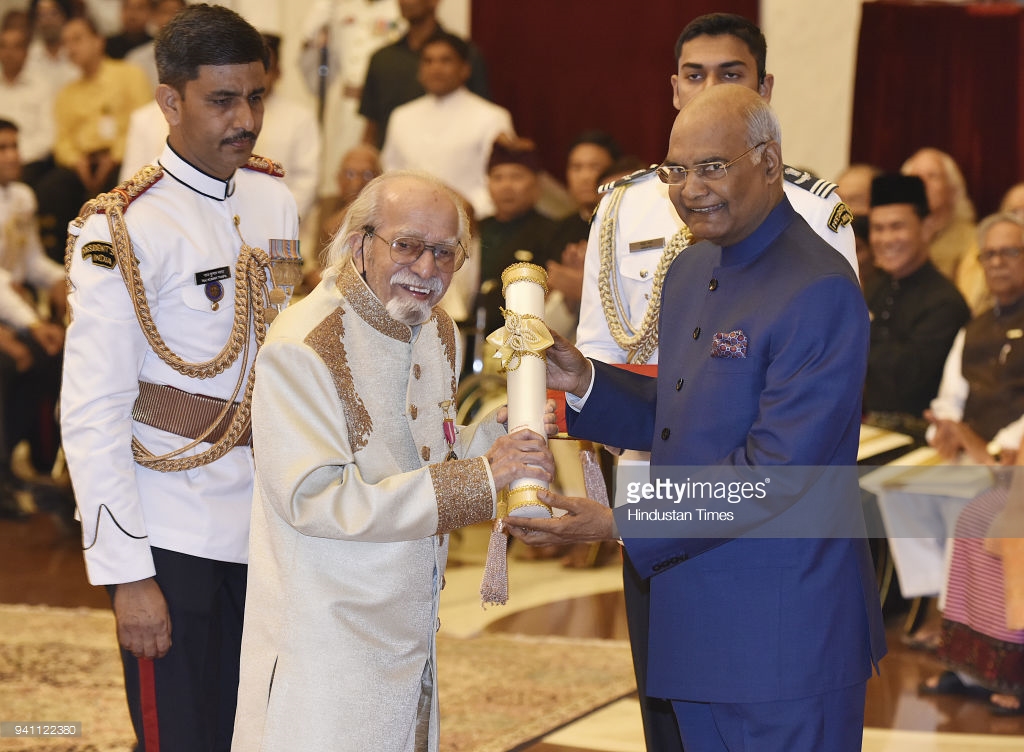
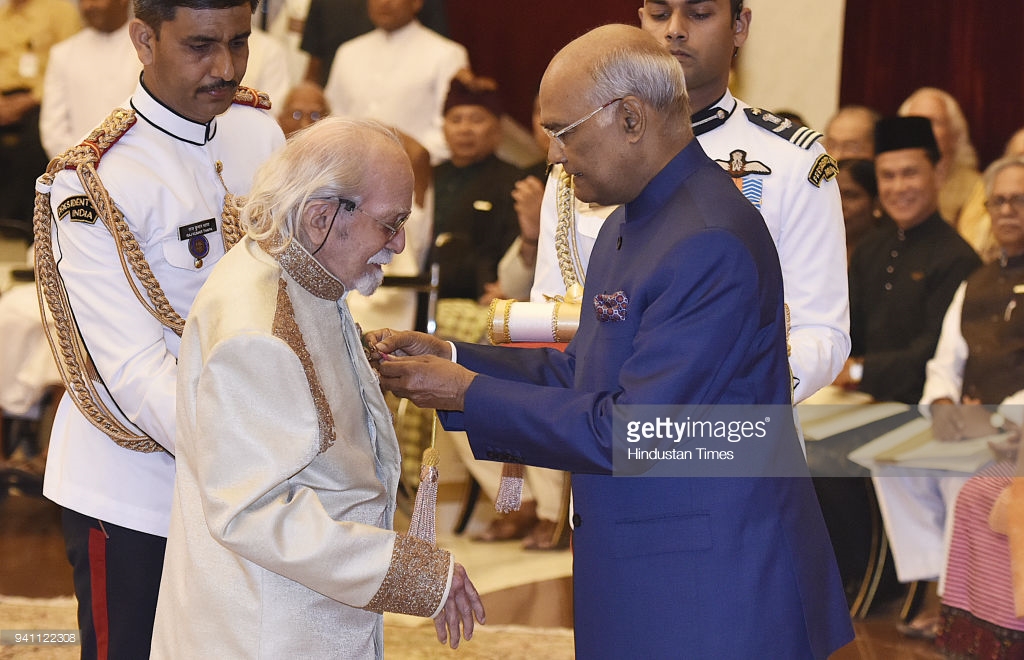
Awarded India's third highest civilian honor by President Ram Nath Kovind at Rashtrapati Bhavan — the pinnacle of a career spent making Indian art visible to the world.

2021

A Legend Completes His Journey

Passes away peacefully at his home in Dona Paula, Goa, on 14 March 2021, at the age of 95. His canvases remain — vivid, joyful, eternal.

A Life Well Lived

In Distinguished
Company

A life that touched everyone — from fellow painters in 1950s Paris to India's prime ministers and presidents.

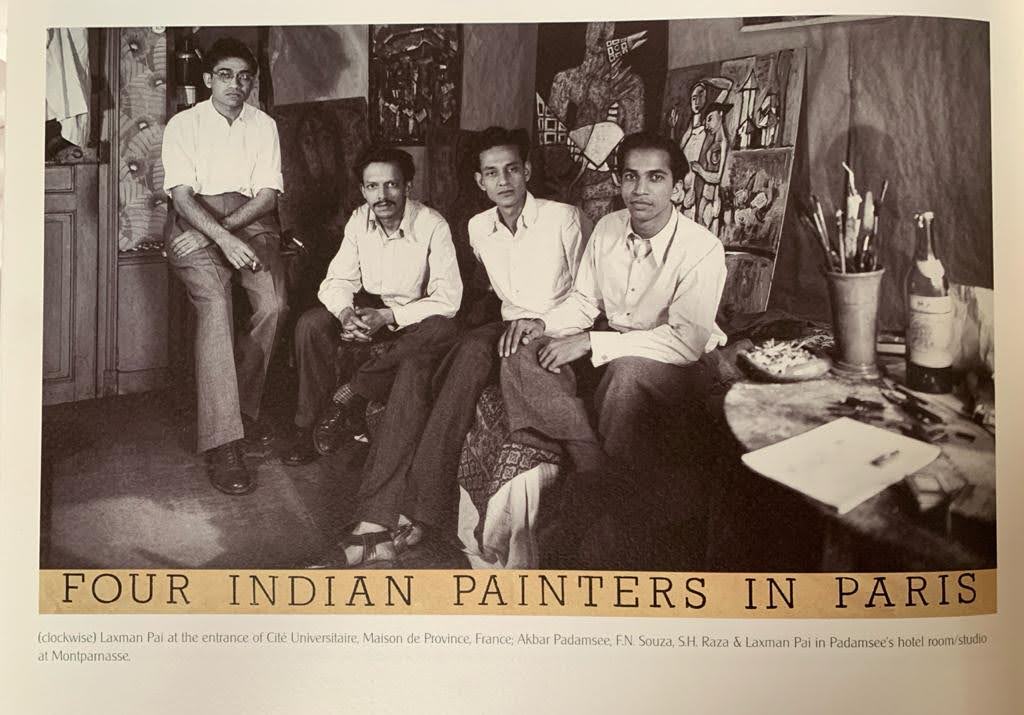
Laxman Pai with Akbar Padamsee, F.N. Souza, and S.H. Raza in Padamsee's studio at Montparnasse, Paris, 1950s
🎨
Four Indian Painters in Paris
Akbar Padamsee, F.N. Souza, S.H. Raza & Laxman Pai
Padamsee's studio · Montparnasse, Paris · early 1950s

Four young Indian painters in Paris — Akbar Padamsee, F.N. Souza, S.H. Raza, and Laxman Pai — gathered in Padamsee's hotel room/studio at Montparnasse. Souza and Raza had co-founded the Bombay Progressive Artists' Group; in Paris they would together shape the language of modern Indian art for the rest of the century.

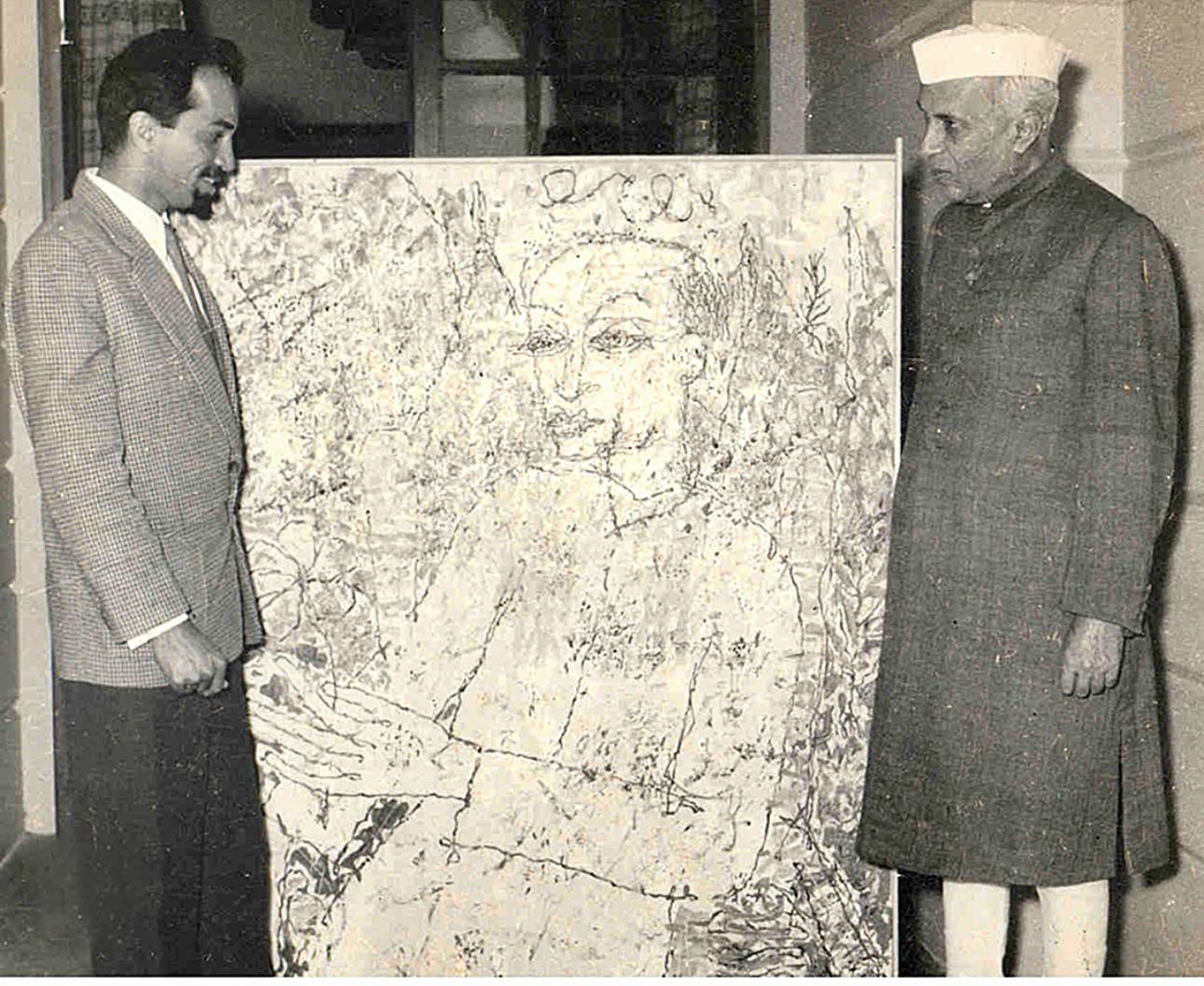
Laxman Pai showing a painting to Prime Minister Jawaharlal Nehru
🎨
With Pandit Jawaharlal Nehru
Prime Minister Jawaharlal Nehru
c. 1950s

The young painter — barely thirty — presents one of his early canvases to India's first Prime Minister. A moment of recognition that helped set his trajectory.

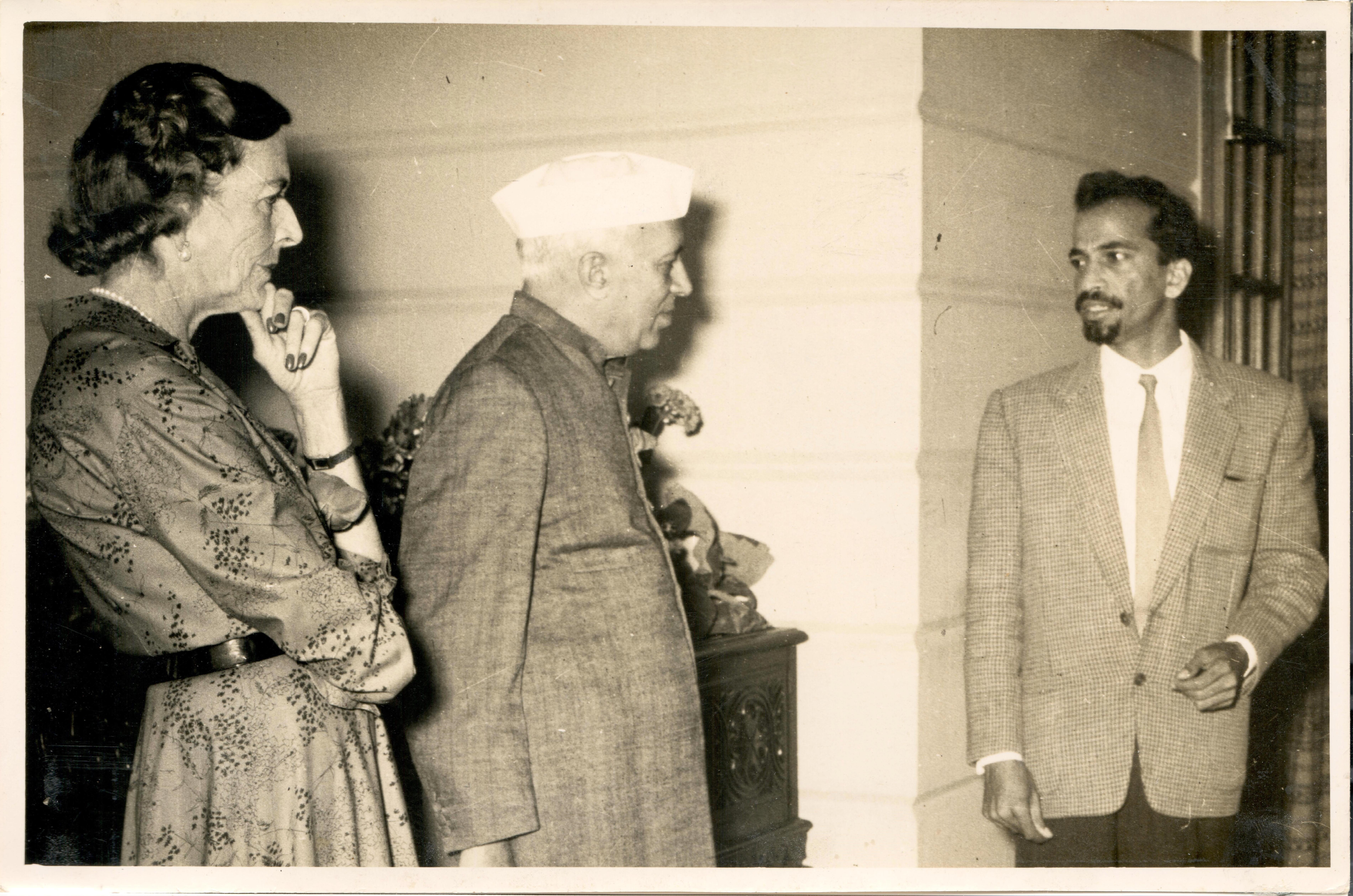
Laxman Pai with Pandit Nehru and Lady Edwina Mountbatten, February 1955
🌐
With Nehru & Edwina Mountbatten
Pandit Nehru & Lady Edwina Mountbatten
February 1955

A young Laxman Pai meets Prime Minister Nehru and Lady Edwina Mountbatten — the painter, then in his Paris years, briefly back at the centre of newly independent India's cultural life.

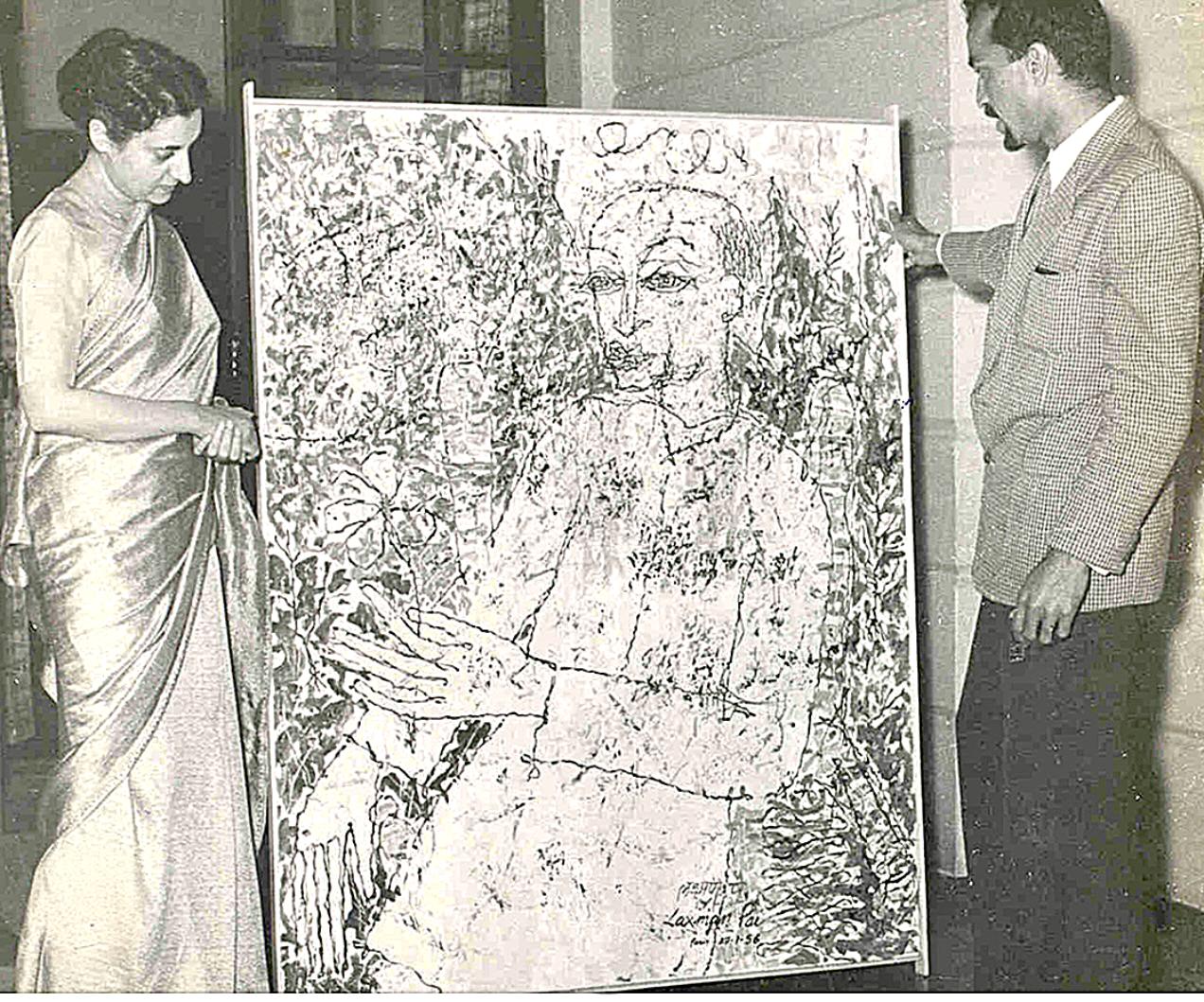
Laxman Pai presents a painting to Prime Minister Indira Gandhi
🌹
With Prime Minister Indira Gandhi
Prime Minister Indira Gandhi
A painting unveiled

Laxman Pai presents a large canvas to Prime Minister Indira Gandhi — recognition of his place among the foremost Indian painters of his generation.

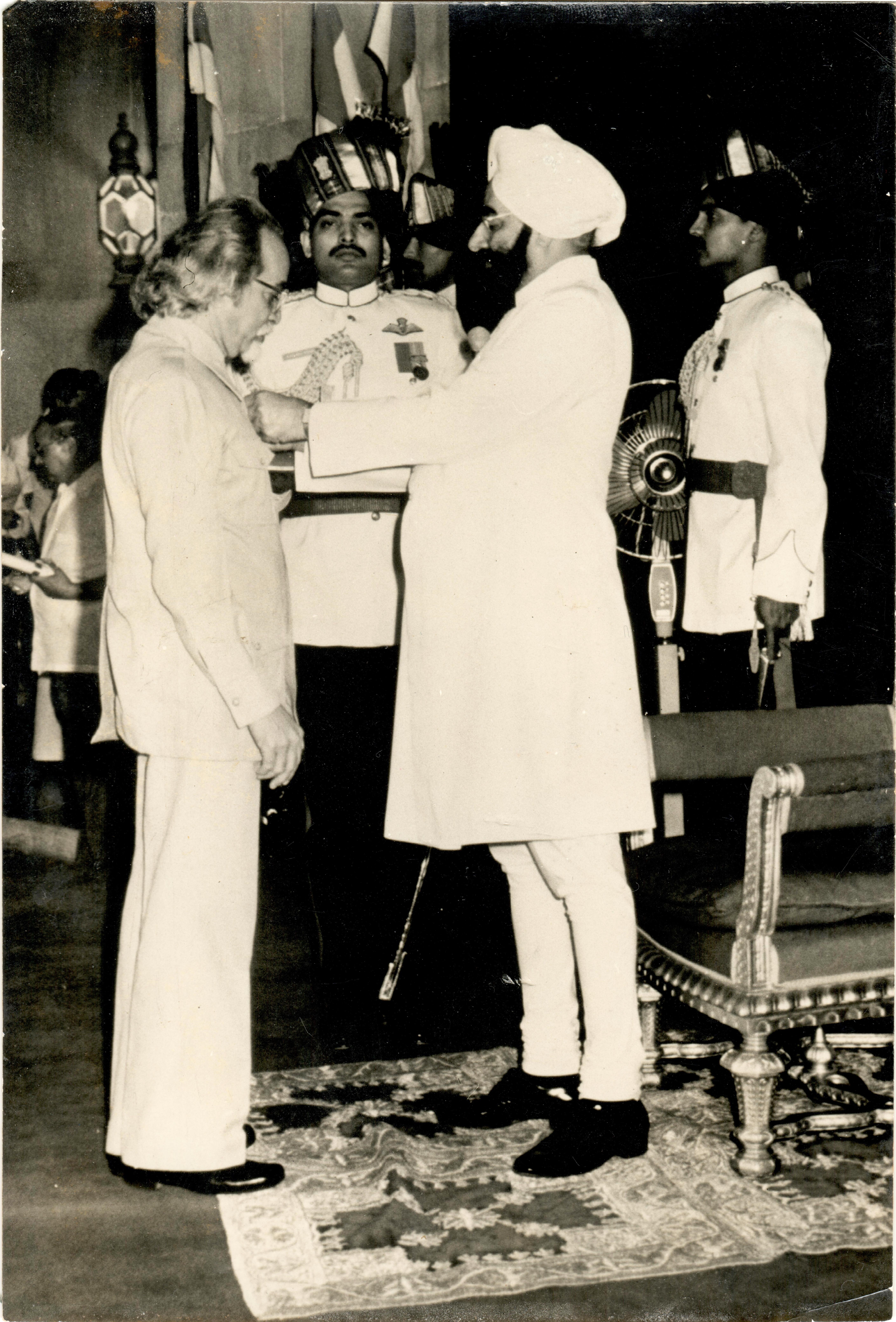
Laxman Pai receives the Padma Shri from President Giani Zail Singh, 16 March 1985
🏅
Padma Shri — President Zail Singh
President Giani Zail Singh
Padma Shri Ceremony · Rashtrapati Bhavan · 16 March 1985

President Zail Singh confers the Padma Shri on the fifty-nine-year-old painter — India's first formal national honor for Laxman Pai, recognizing decades of work that had already taken him from Paris to São Paulo to Bombay.

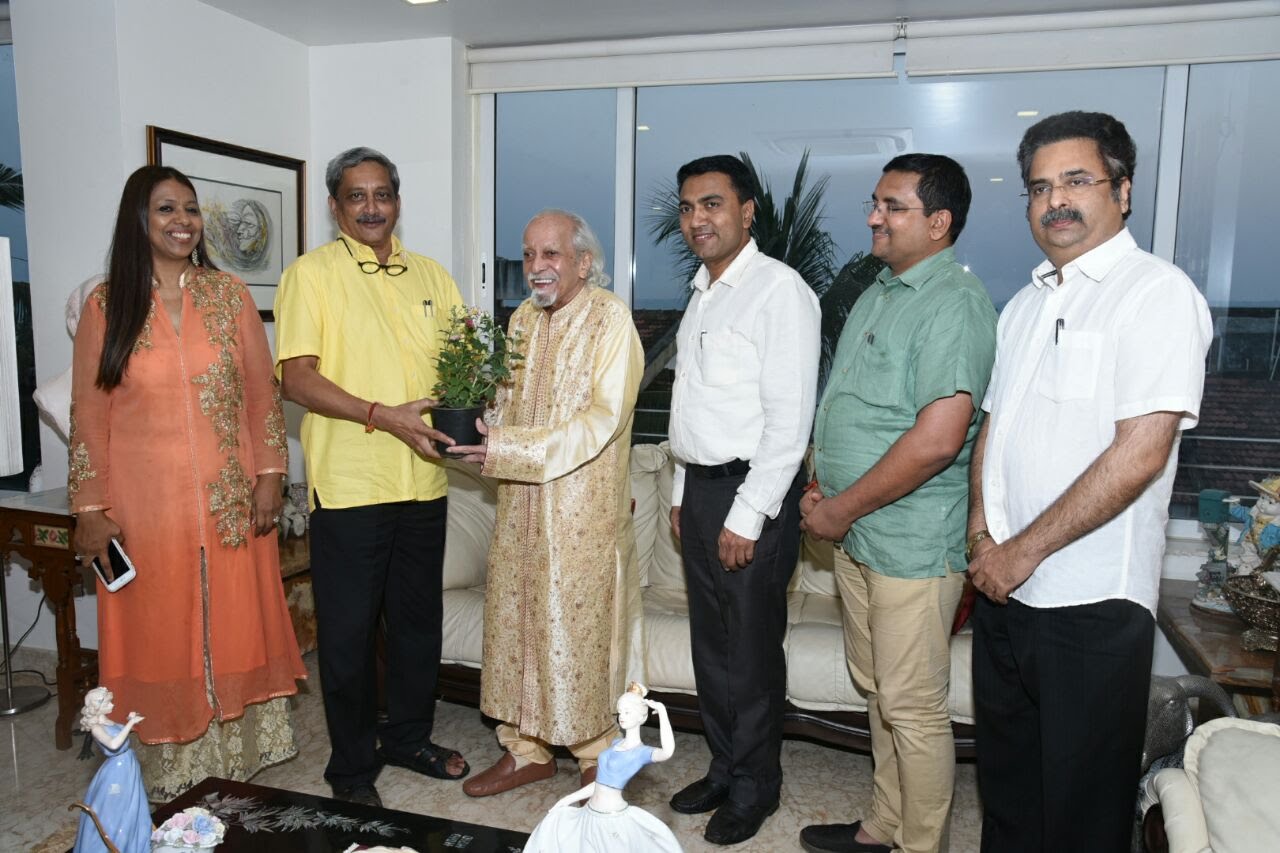
Laxman Pai with Chief Minister Manohar Parrikar at Dona Paula, Goa, India
🌺
With CM Manohar Parrikar & CM Pramod Sawant
Chief Minister Manohar Parrikar & others
Dona Paula, Goa, India

Goa's legendary Chief Minister Manohar Parrikar (in yellow) visits Laxman Pai at Dona Paula, accompanied by Chief Minister Pramod Sawant and other ministers — a warm exchange between Goa's most celebrated figures.

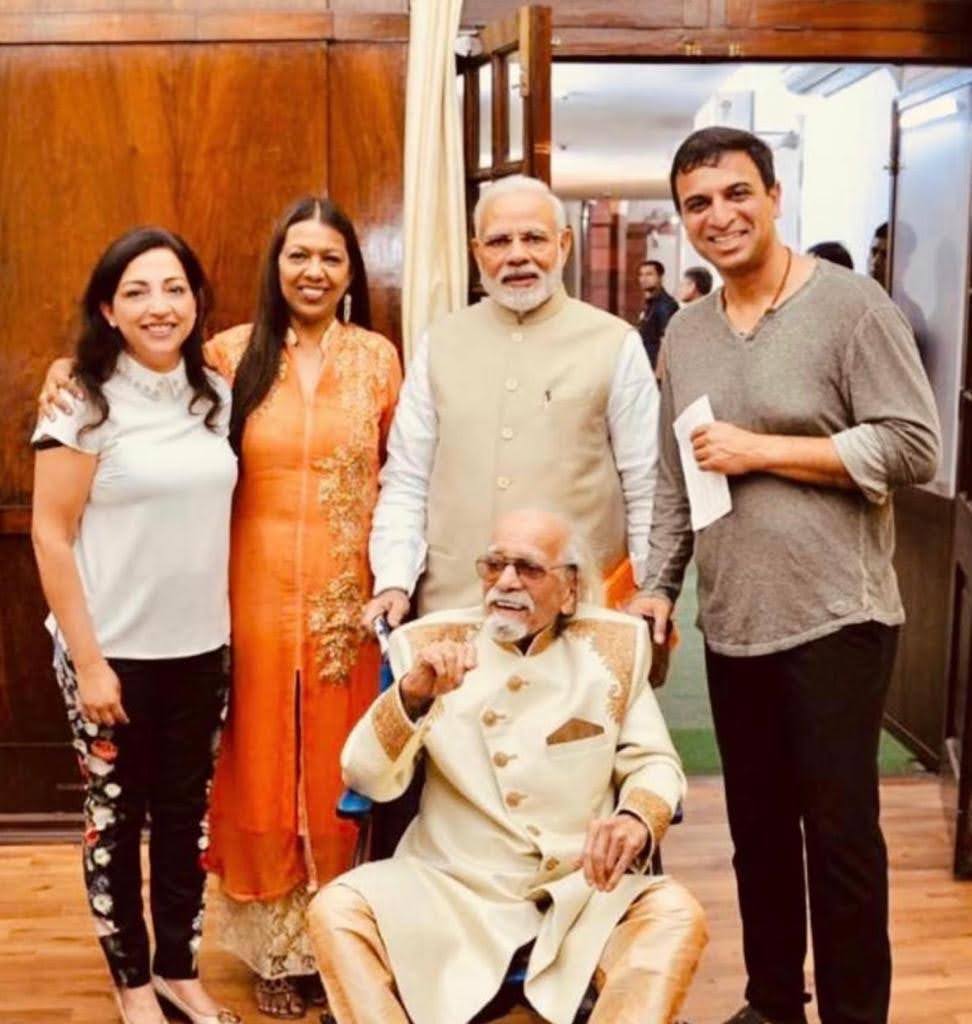
Laxman Pai with Prime Minister Narendra Modi and family
🇮🇳
With Prime Minister Narendra Modi
Prime Minister Narendra Modi
A family audience with the Prime Minister

The Prime Minister meets the master painter, surrounded by three generations of the Pai family — a testament to the artist's stature in national life.

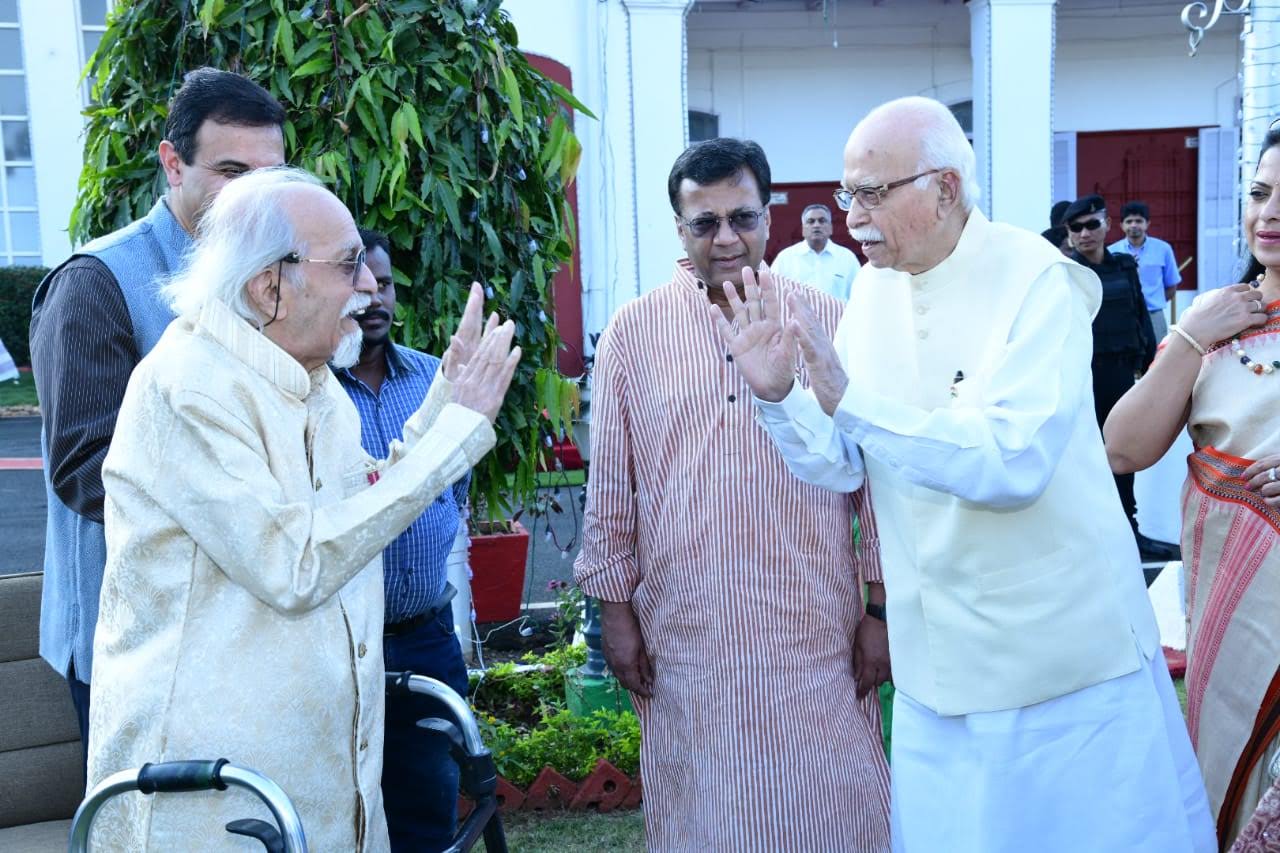
Laxman Pai in animated conversation with L.K. Advani
🤝
With L.K. Advani
L.K. Advani, Former Deputy Prime Minister
An animated exchange between two legends

Laxman Pai and L.K. Advani in spirited conversation — both men in their nineties, both towering figures in the India they helped shape.

Laxman Pai with President Ram Nath Kovind at the Padma Bhushan ceremony, 2018
🏅
Padma Bhushan — President Kovind pins the medal
President Ram Nath Kovind
Padma Bhushan Ceremony · Rashtrapati Bhavan · 2018

President Kovind personally pins India's third-highest civilian honor on the ninety-two-year-old master — thirty-three years after the Padma Shri, the nation's recognition complete.

Laxman Pai receives the Padma Bhushan scroll from President Ram Nath Kovind, 2018
📜
Padma Bhushan scroll — President Kovind
Padma Bhushan Citation
Rashtrapati Bhavan · 2018

The artist holds his Padma Bhushan citation, flanked by the Presidential Guard of Honor — the crowning recognition of a life in paint.

Honors

A Career
Celebrated by India

1961 · 1963 · 1972

Lalit Kala Akademi National Awards × 3

Three National Awards from India's apex body for visual arts — a rare achievement placing Pai among the foremost painters of his generation.

1985

Padma Shri

Awarded by the Government of India for distinguished service in the field of art — India's fourth highest civilian honor. Conferred by President Giani Zail Singh at Rashtrapati Bhavan on 16 March 1985.

Padma Shri ceremony with President Zail Singh, 1985 Padma Shri ceremony with President Zail Singh, 1985
1995

Nehru Award

Awarded for outstanding contributions to art and culture in the spirit of Nehru's vision of a modern, creative India.

2016

Gomant Vibhushan

Goa's highest civilian award — recognizing his extraordinary contribution to the culture and artistic heritage of his home state.

2018

Padma Bhushan

India's third highest civilian honor, presented personally by President Ram Nath Kovind at Rashtrapati Bhavan — the crowning recognition of a lifetime of creative achievement.

Padma Bhushan ceremony Padma Bhushan scroll
Legacy

Where His
Works Live On

Laxman Pai's paintings are held in major institutional collections across India and the world, ensuring his vision continues to speak to future generations.

National Gallery of Modern ArtNew Delhi, India
New York Public LibraryNew York, USA
Ben & Abby Grey FoundationNew York, USA
Berlin MuseumBerlin, Germany
Centre National des Arts PlastiquesParis, France
Madras MuseumChennai, India
Nagpur MuseumNagpur, India
Punjab University MuseumChandigarh, India
110+
Solo exhibitions across five continents, 1952–2021 — London, Paris, Munich, New York, San Francisco, São Paulo, Bangkok, Singapore, New Delhi, Mumbai, Kolkata, and Goa.